

Chronic Migraine Botox in Walnut Creek
Chronic migraine is a neurologic condition that can cause frequent, disabling headaches and migraine symptoms. For appropriately selected adults, Therapeutic Botox may be used as a preventive treatment to reduce the frequency and severity of chronic migraine over time.
At NeuroBeauty Clinic in Walnut Creek, chronic migraine Botox is provided for patients with an established diagnosis and referral from a treating clinician. Treatment is performed exclusively by Dr. Negar Sodeifi, MD, a neurologist. The referring clinician establishes the diagnosis and referral; NeuroBeauty receives that referral and provides the physician-performed Botox treatment. The treatment visit includes review of the available history, medication information, prior treatment, and safety considerations relevant to the referred plan. Read more in our Blog Post.
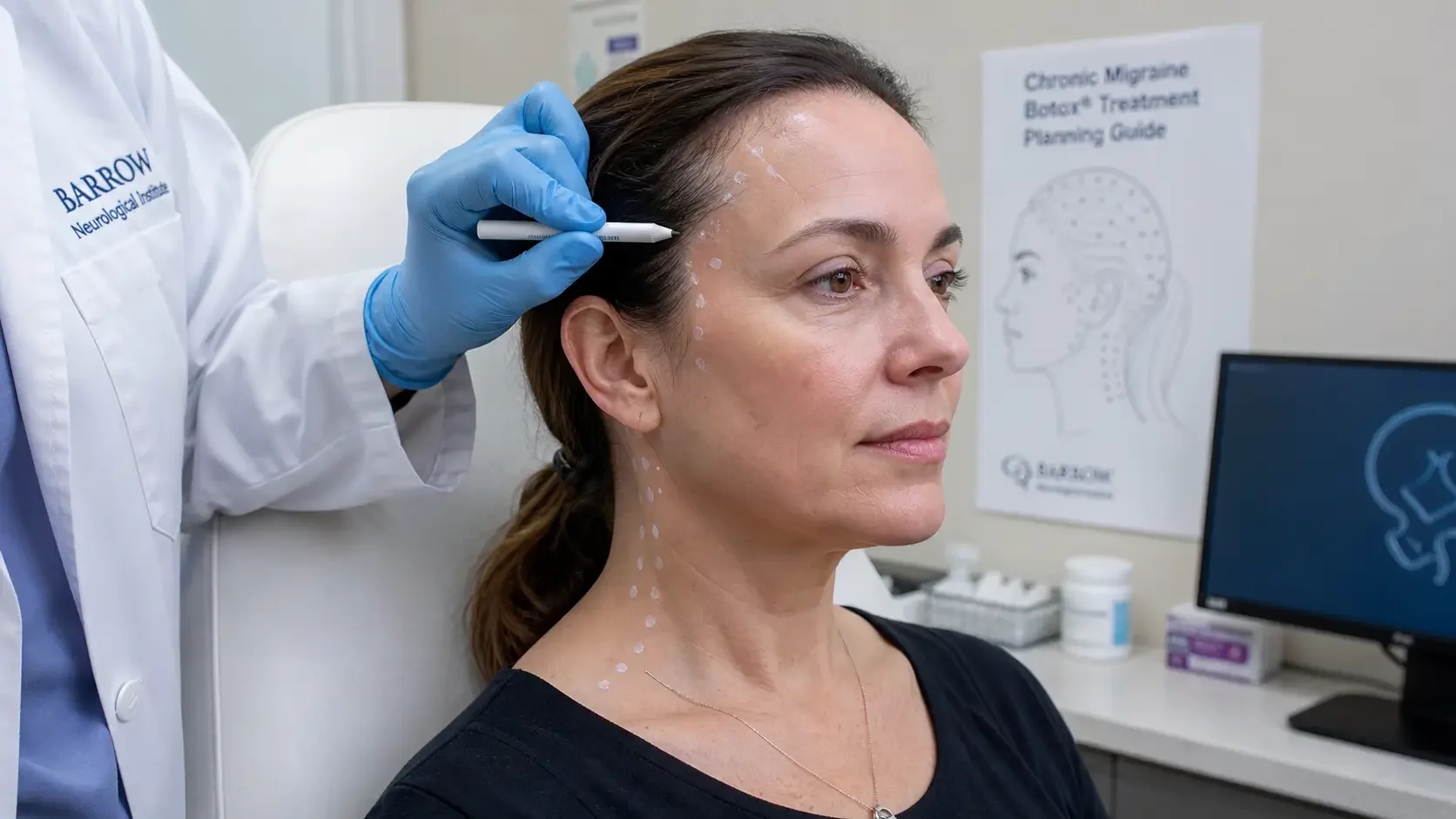
A neurologist-guided approach to migraine treatment
Botox for chronic migraine is not the same as cosmetic Botox. While the medication is related, the treatment pattern, dosing, goals, and clinical decision-making are different. Read more about chronic migraine treatment in our Blog Post.
Chronic migraine Botox is a medical treatment used for prevention. It is not designed to stop a migraine that is already happening. It is also not the right treatment for every headache pattern.
For referred patients, NeuroBeauty receives the established diagnosis and treatment referral. The referring clinician determines whether the headache pattern meets the relevant diagnosis and whether a referral is appropriate; Dr. Sodeifi reviews the available information for the planned treatment visit and provides Botox when clinically appropriate. NeuroBeauty does not replace the referring clinician’s diagnostic evaluation.
What chronic migraine Botox may help with
Botox may be considered for selected adults with chronic migraine who have frequent headache days and migraine features. The American Migraine Foundation describes chronic migraine as headache occurring on 15 or more days per month for more than 3 months, with at least 8 days having migraine features.
Botox may help selected patients reduce:
Number of headache days
Migraine frequency
Migraine severity
Migraine-related disability
Use of acute medications in some patients
Headache burden over repeated treatment cycles
Results vary. Some patients notice benefit after the first treatment cycle, while others need additional cycles before determining whether Botox is effective.
Chronic migraine vs. tension headache
The term “tension headache” is often used casually by patients to describe head, neck, scalp, or shoulder tightness. However, from a medical standpoint, tension-type headache and chronic migraine are different diagnoses.
Botox is best supported and FDA-approved for chronic migraine, not ordinary episodic tension-type headache. For patients who describe tension, scalp pressure, neck tightness, or shoulder-related headache symptoms, the referring clinician determines the primary diagnosis and referral. NeuroBeauty provides Botox treatment when the referred treatment plan indicates it is appropriate.
This distinction matters because the treatment plan depends on the diagnosis.
How Botox works for chronic migraine
Botox is thought to help chronic migraine by reducing pain signaling around nerve endings involved in migraine pathways. It enters nerve endings near injection sites and blocks release of chemicals involved in pain transmission, helping prevent activation of pain networks before attacks begin.
For chronic migraine, Botox is placed in a structured pattern across head and neck muscle regions. This is different from cosmetic forehead or frown-line treatment.
A typical chronic migraine Botox treatment pattern involves multiple small injections across areas such as the forehead, temples, back of the head, upper neck, and trapezius region.
Why diagnosis matters before treatment
Not all frequent headaches are chronic migraine. Some patients have more than one headache disorder at the same time.
For a referred treatment visit, the available clinical information may include:
Headache frequency
Number of migraine days per month
Duration of attacks
Migraine features such as nausea, light sensitivity, sound sensitivity, aura, or worsening with activity
Neck and shoulder involvement
Medication overuse
Prior preventive medications
Acute medication response
Neurologic history
Pregnancy status or plans
Prior botulinum toxin exposure
Safety considerations and contraindications
The goal of the NeuroBeauty visit is to review the referred treatment plan and provide Botox when it is clinically appropriate; it is not to establish a new migraine diagnosis online.
What treatment is like
Chronic migraine Botox is performed in-office. Treatment typically involves multiple small injections across specific head and neck areas. The procedure is usually brief, but the planning and diagnosis are important.
Botox for chronic migraine is typically repeated about every 12 weeks when clinically appropriate.
Improvement may take time. Some patients respond after the first treatment cycle, while others may need two or three cycles before the benefit is clear.
Who may be a good candidate
For patients with an established chronic migraine diagnosis and referral, Chronic migraine Botox may be provided when the referred treatment plan supports it.
It may be a good fit for patients who:
Have 15 or more headache days per month
Have migraine features on at least some headache days
Have headaches that significantly affect function or quality of life
Have tried or considered preventive migraine treatment
Want a neurologist-performed Botox treatment rather than a medspa-style approach
Understand that Botox is preventive and results vary
The referring clinician establishes the diagnosis and referral. NeuroBeauty reviews available history and safety information for the treatment visit; treatment is provided only when clinically appropriate.
Who may not be a good candidate
Therapeutic Botox may not be appropriate for patients with infrequent episodic migraine, ordinary occasional tension-type headaches, certain neuromuscular disorders, allergy to botulinum toxin ingredients, or unrealistic expectations.
If the referring clinician identifies another primary cause, a different evaluation or treatment plan may be needed. Examples may include medication-overuse headache, sinus disease, uncontrolled hypertension, cervical spine pathology, TMJ-related pain, secondary headache disorders, or another neurologic condition.
NeuroBeauty provides treatment only when the referred plan and available safety information support it.
What chronic migraine Botox cannot do
Botox cannot stop a migraine that has already started, cure migraine permanently, replace a full neurologic evaluation when red flags are present, or guarantee a specific reduction in headache days.
It is a preventive treatment. The goal is to reduce migraine burden over time, not to eliminate every headache in every patient.
If your headaches are new, rapidly worsening, associated with neurologic symptoms, triggered by exertion, associated with fever, or otherwise concerning, a different medical evaluation may be needed before considering Botox.
Safety considerations
Common Botox side effects may include temporary pain, redness, swelling, tenderness, or bruising at injection sites. Depending on injection pattern, some patients may experience temporary neck soreness, muscle weakness, headache, brow or eyelid asymmetry, or flu-like symptoms.
Rare but serious botulinum toxin complications can occur, including symptoms related to distant spread of toxin effect such as swallowing or breathing difficulty.
Because chronic migraine treatment involves medical dosing and multiple injection sites, treatment should be performed by a clinician with appropriate knowledge of head, neck, and neurologic anatomy.
Pricing and insurance
Therapeutic Botox pricing depends on the diagnosis, treatment plan, dosing, and whether the treatment is being performed for a medical indication.
NeuroBeauty Clinic is a boutique, physician-only aesthetic practice with a consultative, phone-first model. For therapeutic Botox, consultation or referral may be required, and pricing should be reviewed directly with the office before treatment.
For the most current information, please contact the office at (925) 726-3876 or request an appointment online.
Related treatments
Patients considering chronic migraine Botox may also be interested in:
Cosmetic Botox, if appropriate and separate from medical treatment planning
The best plan depends on headache diagnosis, muscle involvement, neurologic history, medication use, and treatment goals.
Frequently Asked Questions (FAQ) About Botox For Migraines
-
Yes. Botox is approved for prevention of chronic migraine in adults. It is generally framed for patients with 15 or more headache days per month, with headaches lasting 4 or more hours. It is not approved for patients with 14 or fewer headache days per month.
-
The American Migraine Foundation describes chronic migraine as headache on 15 or more days per month for more than 3 months, with at least 8 of those days having migraine features.
-
A typical chronic migraine Botox treatment involves multiple small injections across head and neck regions. The American Migraine Foundation describes a treatment round as injections into 31 specific points.
-
Botox is FDA-approved for chronic migraine, not ordinary episodic tension-type headache. If you describe “tension headaches,” Dr. Sodeifi will evaluate whether the pattern is chronic migraine, tension-type headache, neck-related headache, TMJ-related pain, or another condition.
-
Pricing depends on diagnosis, dosing, treatment plan, and whether a therapeutic Botox plan is appropriate. NeuroBeauty Clinic does not accept insurance at this location.
-
Chronic migraine Botox is commonly repeated about every 12 weeks when clinically appropriate.
-
No. The medication may be the same, but the purpose, dosing, injection pattern, and medical decision-making are different. Chronic migraine Botox is a preventive medical treatment, while cosmetic Botox is used for aesthetic goals such as softening selected movement-related facial lines.
-
Some patients notice improvement after the first cycle, but it may take repeated treatment cycles to determine response. The American Migraine Foundation notes that patients may see increasing benefit over additional treatment cycles.
-
Bring your headache history, approximate number of headache and migraine days per month, current and past migraine treatments, medication list, prior Botox history if any, and any headache diary or notes you already keep. This helps Dr. Sodeifi evaluate whether the pattern is consistent with chronic migraine and whether Botox fits your broader treatment plan. If your headaches are new, rapidly worsening, or associated with neurologic symptoms, a different medical evaluation may be needed before Botox is considered.
-
No. Botox is preventive. It is not an acute migraine rescue medication.
Request a referred treatment visit
NeuroBeauty is located in Walnut Creek, California, and serves patients from Lafayette, Danville, Alamo, San Ramon, Pleasant Hill, Concord, and the greater East Bay. If you have an established diagnosis and referral for chronic migraine Botox, NeuroBeauty provides physician-performed treatment visits with Dr. Sodeifi. The referring clinician remains responsible for diagnosis and referral; NeuroBeauty's role is to provide the referred treatment when clinically appropriate.
Call (925) 726-3876 or request a referred treatment visit online, and the office will contact you directly to discuss availability and next steps.
Page details
Chronic Migraine Botox in Walnut Creek
Neurologist-performed Botox for chronic migraine in Walnut Creek. Physician-led evaluation for headache pattern, candidacy, and treatment planning.
Chronic Migraine Botox in Walnut Creek
Neurologist-performed Botox for chronic migraine in Walnut Creek. Physician-led evaluation for headache pattern, candidacy, and treatment planning.