
PRP Microneedling in Walnut Creek
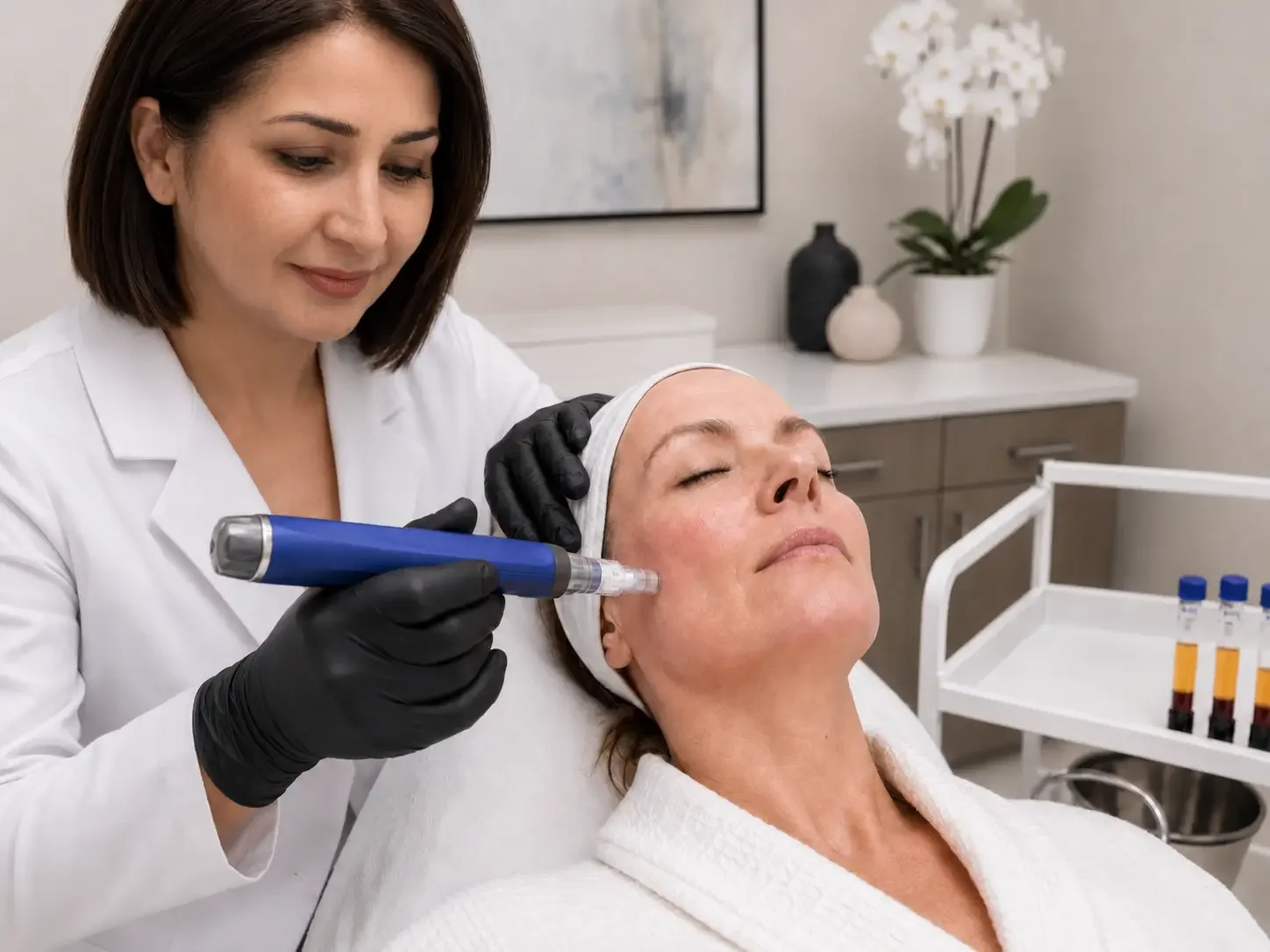
PRP microneedling combines SkinPen microneedling with platelet-rich plasma prepared from your own blood. This treatment is designed to support skin quality, texture, collagen remodeling, and a more refreshed appearance through a physician-led, regenerative approach.
At NeuroBeauty Clinic in Walnut Creek, PRP microneedling is planned through a conservative, medically guided process. Treatment is based on your skin quality, goals, downtime tolerance, candidacy, and whether PRP is appropriate for your specific treatment plan.
A physician-led approach to skin rejuvenation
PRP microneedling is not a quick cosmetic add-on. It is a skin-quality treatment that should be planned thoughtfully.
Microneedling creates controlled micro-injuries in the skin, which stimulate the skin’s natural repair response. PRP is then used to support tissue signaling and healing responses. PRP is a concentration of your own platelets and growth factors prepared from a small blood draw, paired with microneedling for patients seeking a more intensive skin-quality approach.
The goal is gradual improvement in skin texture, tone, and overall quality — not an artificial or overdone result.
What PRP microneedling may help improve
PRP microneedling may be considered for selected patients who want improvement in:
Skin texture
Fine lines
Dull or rough-looking skin
Mild crepiness
Enlarged pores
Selected acne scars
Early skin-quality changes
Overall collagen support
Facial, neck, and hand skin rejuvenation
Results vary based on baseline skin quality, age, collagen response, sun exposure, aftercare, medical history, treatment spacing, and the number of treatments completed.
How PRP microneedling works
PRP microneedling has two main components.
First, SkinPen microneedling creates controlled microchannels in the skin.
Second, PRP is prepared from your own blood and applied as part of the treatment. PRP is autologous, meaning it comes from your own body. Autologous PRP avoids introducing foreign filler material, although it is still not risk-free.
PRP microneedling is not Botox and it is not filler. It does not relax muscles or add facial volume. It is used for skin quality and regenerative support.
SkinPen with PRP vs. standard SkinPen microneedling
Standard SkinPen microneedling uses controlled mechanical stimulation to support the skin’s repair process.
SkinPen with PRP adds platelet-rich plasma prepared from your own blood. This may be appropriate for patients seeking a more intensive skin-quality approach, depending on candidacy, goals, and treatment area.
PRP is not necessary for every patient. Some patients are well served by standard SkinPen microneedling. Others may benefit from adding PRP when the goal is broader skin-quality support.
Treatment areas
Face & Neck with PRP
PRP microneedling of the face and neck may be appropriate for patients who want more consistent rejuvenation across both areas. This can be helpful when facial texture, neck crepiness, fine lines, or uneven skin quality are concerns together.
Face, Neck & Hands with PRP
PRP microneedling of the face, neck, and hands is a broader skin-quality treatment for patients who want a more comprehensive approach. This may be appropriate when the hands also show crepiness, fine lines, sun-related texture changes, or thinning skin.
Why patients add the hands
The hands often show age and sun exposure differently than the face. They may develop fine lines, crepiness, dryness, roughness, and thinning skin. If the face and neck are treated but the hands are not, the contrast can become more noticeable.
PRP microneedling for the hands may be considered when the goal is gradual skin-quality improvement. It does not replace lost volume, remove prominent veins, or erase pigment spots, but it may support smoother texture and collagen remodeling in selected patients.
Pricing
PRP microneedling pricing depends on treatment area and the treatment plan.
For the most current pricing, please see the SkinPen pricing page or contact the office at (925) 726-3876 .
Who may be a good candidate
PRP microneedling may be appropriate for patients who want a more intensive skin-quality treatment than standard microneedling alone.
It may be a good fit for patients who:
Want gradual improvement in skin texture and tone
Have mild fine lines, dullness, crepiness, or roughness
Are interested in collagen support rather than filler or Botox
Prefer a regenerative treatment using their own PRP
Understand that results are gradual and usually require a series or maintenance plan
Want physician-led treatment planning rather than a medspa-style approach
Candidacy is determined during consultation based on skin type, treatment area, medical history, medications, pigmentation risk, healing risk, goals, and expectations.
Who may not be a good candidate
PRP microneedling may not be appropriate for every patient. Patients with active skin infection, active rash, current cold sore outbreak, poor wound healing, uncontrolled diabetes, immune suppression, keloid tendency, significant bleeding risk, anticoagulant therapy, recent isotretinoin use, recent tanning, or planned sun exposure may need to delay treatment or consider a different approach.
Because PRP involves a blood draw, patients with certain blood disorders, severe anemia, platelet disorders, active infection, or other medical considerations may not be ideal candidates.
Dr. Sodeifi will review candidacy before recommending treatment.
What PRP microneedling cannot do
PRP microneedling cannot replace surgery, filler, Botox, lasers, or medical treatment for active skin disease. It cannot remove deep wrinkles, fully tighten loose skin, erase all acne scars, remove prominent hand veins, or create instant volume.
It is best understood as a skin-quality treatment. Improvements are usually gradual and depend on the skin’s ability to respond.
What to expect
Treatment begins with review of the treatment area and goals. A small blood draw is performed to prepare PRP. The skin is cleansed, and numbing may be used for comfort depending on the treatment plan.
After treatment, the skin commonly looks pink or red and may feel sunburned for a short period.
Aftercare is important. Common SkinPen aftercare guidance includes no sunscreen for the first 24 hours, strict sun avoidance, minimizing sun exposure for about 72 hours, and avoiding makeup for the first 24 hours.
Safety considerations
PRP is autologous, meaning it comes from your own blood, but that does not make it risk-free. Common PRP-related effects may include temporary redness, swelling, bruising, tenderness, and rarely infection risks inherent to any procedure that disrupts the skin.
SkinPen and PRP treatment should be performed with attention to skin type, treatment depth, sterility, aftercare, pigmentation risk, infection risk, and candidacy.
Related treatments
Patients considering PRP microneedling may also be interested in:
Filler for volume or structural support
For a more detailed explanation of treatment planning, candidacy, recovery, and the role of platelet-rich plasma, read Microneedling With PRP in Walnut Creek.
The best plan depends on whether your concern is skin texture, fine lines, acne scars, skin laxity, volume loss, muscle movement, or overall facial balance.
Frequently Asked Questions (FAQ) About Microneedling With PRP
-
PRP microneedling combines SkinPen microneedling with platelet-rich plasma prepared from your own blood. It is used to support skin quality, texture, and healing responses.
-
PRP stands for platelet-rich plasma. PRP as a concentration of your own platelets and growth factors prepared from a small blood draw and used to support tissue signaling and healing responses.
-
Most patients look red or pink and feel sunburned for a short period after microneedling. Downtime varies by depth, treatment area, and skin sensitivity.
-
PRP is autologous, meaning it comes from your own blood. That does not mean it is risk-free, but it avoids introducing foreign filler material.
-
No. PRP microneedling is a skin-quality treatment. It does not add volume or structural support the way filler does.
-
No. Botoxrelaxes targeted muscles. PRP microneedling works on skin quality and collagen support.
-
No. Standard SkinPen microneedling uses controlled mechanical stimulation. PRP microneedling adds platelet-rich plasma prepared from your own blood.
-
"Vampire facial" is a casual nickname often used for microneedling combined with platelet-rich plasma, or PRP. At NeuroBeauty, the more precise term is SkinPen microneedling with PRP. The wording matters because PRP involves a blood draw, preparation of platelet-rich plasma, skin-barrier disruption, sterile technique, and careful candidacy review.
-
PRP facial and platelet-rich plasma facial are broad patient phrases that can be used in different ways. At NeuroBeauty, PRP microneedling refers specifically to SkinPen microneedling combined with platelet-rich plasma prepared from your own blood. It is used as a skin-quality treatment for selected patients, not as filler, Botox, or a replacement for medical treatment of active skin disease.
-
No. PRP microneedling at NeuroBeauty means SkinPen microneedling combined with platelet-rich plasma when appropriate. RF microneedling, PRF microneedling, exosome microneedling, and PDRN microneedling are different categories or adjuncts and should not be treated as interchangeable. During consultation, Dr. Sodeifi will discuss what NeuroBeauty offers, what is appropriate for your skin, and when a different treatment would be a better fit.
Schedule a consultation
NeuroBeauty is located in Walnut Creek, California, and serves patients from Lafayette, Danville, Alamo, San Ramon, Pleasant Hill, Concord, and the greater East Bay. If you are considering PRP microneedling in Walnut Creek, NeuroBeauty Clinic offers physician-led treatment planning focused on skin quality, candidacy, safety, and natural-looking refinement.
Call (925) 726-3876 or request a consultation online, and the office will contact you directly to discuss availability and next steps.
Page details
PRP Microneedling in Walnut Creek
Physician-led PRP microneedling in Walnut Creek with SkinPen for skin texture, fine lines, collagen support, and natural skin rejuvenation.
PRP Microneedling in Walnut Creek
Physician-led PRP microneedling in Walnut Creek with SkinPen for skin texture, fine lines, collagen support, and natural skin rejuvenation.