Botox for TMJ Pain in Walnut Creek: What It May Help and Who It Fits
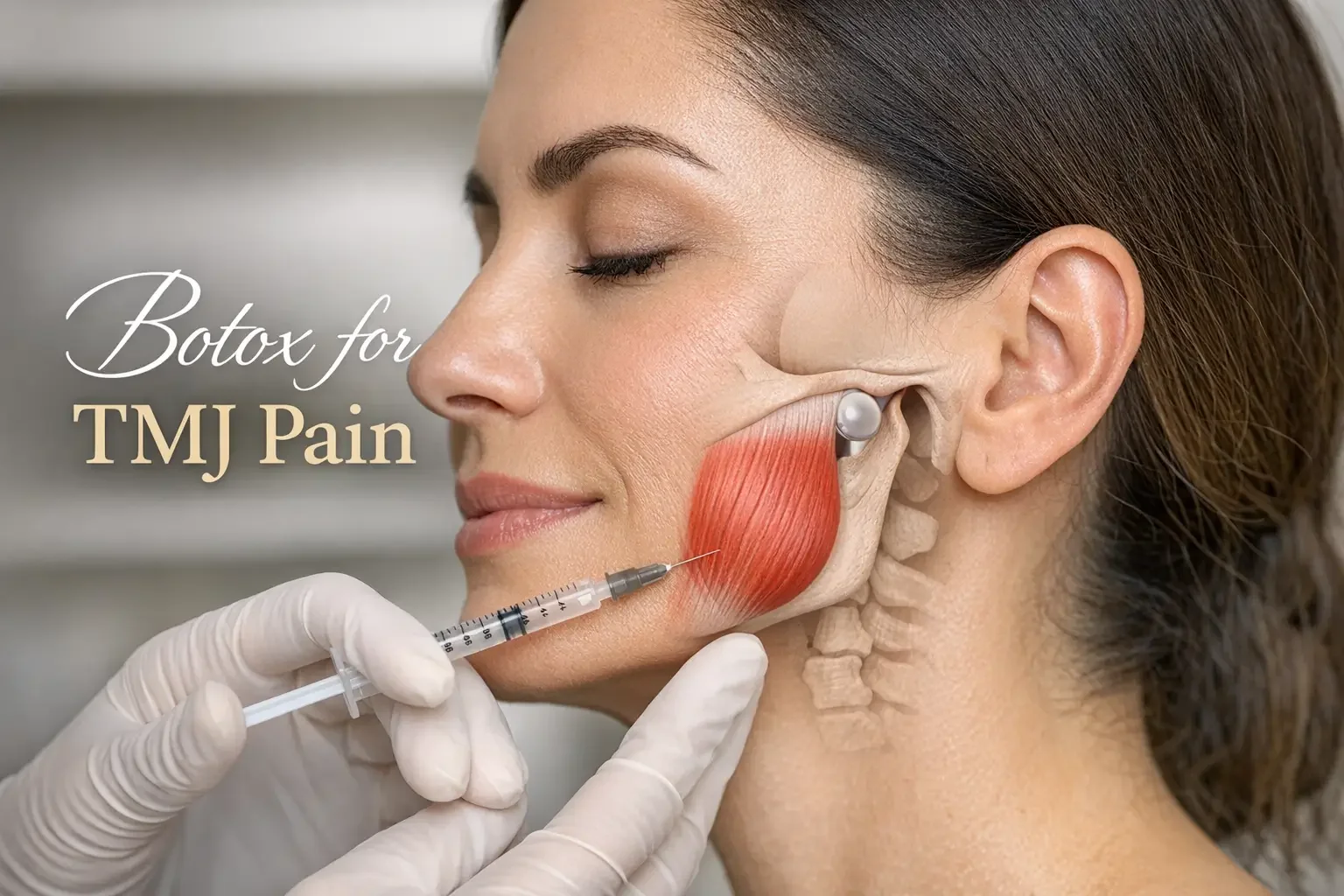
Botox may help reduce jaw tension and clenching in selected patients with TMJ-related muscle overactivity.
Botox for Jaw Clenching and TMJ-Related Pain in Walnut Creek
Many people use "TMJ" as a shorthand for jaw pain, clenching, grinding, tightness, or soreness near the jaw joint. But jaw pain is not always one problem, and Botox is not the right answer for every cause.
For selected patients, Botox may help when jaw clenching, bruxism, or overactivity of the chewing muscles is a meaningful part of the problem. In those cases, reducing excessive masseter muscle activity may help lessen jaw tension and muscle overuse.
At NeuroBeauty in Walnut Creek, all TMJ Botox consultations and treatments are performed by Dr. Negar Sodeifi, MD, a neurologist. The goal is not to treat "TMJ" as a generic label. The goal is to evaluate the pattern, decide whether Botox is appropriate, and build a conservative plan when treatment makes sense.
For treatment planning, candidacy, risks, and scheduling details, see the dedicated TMJ Botox in Walnut Creek service page.
TMJ, TMD, Bruxism, and Masseter Tension: What Do These Terms Mean?
The temporomandibular joint, or TMJ, is the jaw joint. Temporomandibular disorders, often called TMDs, include a group of conditions that can affect the joint, the chewing muscles, or both.
The National Institute of Dental and Craniofacial Research explains that TMD can involve more than one type of problem, including jaw joint disorders, chewing muscle disorders, and headaches associated with TMD. That distinction matters because treatment depends on the source of the symptoms.
Common patient descriptions include:
Jaw clenching.
Teeth grinding, also called bruxism.
Jaw tension or fatigue.
Masseter muscle soreness.
Pain near the jaw joint.
Morning jaw tightness.
Chewing discomfort.
A bulky or overworked masseter area.
Some of these symptoms may be muscle-driven. Others may involve the joint, teeth, bite, dental wear, inflammation, injury, stress, headache patterns, or other medical factors. Botox may be worth discussing when overactive chewing muscles are part of the clinical picture.
How Botox May Help Jaw Clenching and Masseter Overactivity
Botox is a neuromodulator medication that temporarily reduces targeted muscle activity. In TMJ-related treatment, it is often discussed for the masseter muscles, which help close the jaw and can become overactive with clenching or grinding.
When the masseter muscles are working too hard, some patients develop soreness, tightness, chewing fatigue, jaw tension, or a square or bulky lower-face appearance. Botox may help selected patients by reducing excessive contraction in those muscles.
That does not mean Botox fixes the jaw joint itself. It also does not treat every cause of facial pain, dental pain, headache, clicking, locking, or bite change. It may be useful only when the symptoms and exam suggest that muscle overactivity is a meaningful contributor.
Botox for TMJ Pain Is Not a Universal Treatment
This is the most important point: Botox is not a universal TMJ treatment.
Some patients need dental evaluation, a night guard, physical therapy, headache evaluation, imaging, medication review, behavioral strategies, or another medical or dental approach before Botox should be considered. Some jaw symptoms improve with conservative measures. Others require evaluation for joint, dental, neurologic, or inflammatory causes. Patients with tooth wear, dental damage, or bite-related concerns should continue working with their dentist. For dental teams, NeuroBeauty has a separate dental referral information page outlining when physician evaluation may be appropriate for selected jaw-muscle and facial neuromuscular concerns.
Botox for TMD-related symptoms is also different from cosmetic Botox. Some uses are considered off-label depending on the diagnosis and treatment goal. Off-label use is common in medicine, but it should be discussed clearly so you understand the reasoning, limitations, alternatives, and risks.
General medication information from MedlinePlus can be helpful background. It does not replace an individualized evaluation.
Who May Be a Candidate for TMJ Botox?
Botox for jaw clenching or TMJ-related symptoms may be worth discussing if you have:
Frequent jaw clenching.
Teeth grinding or bruxism.
Overworked or enlarged masseter muscles.
Jaw soreness that feels muscular.
Jaw tension that worsens with stress or repetitive clenching.
Chewing fatigue related to muscle overuse.
A history suggesting that muscle overactivity is a major contributor.
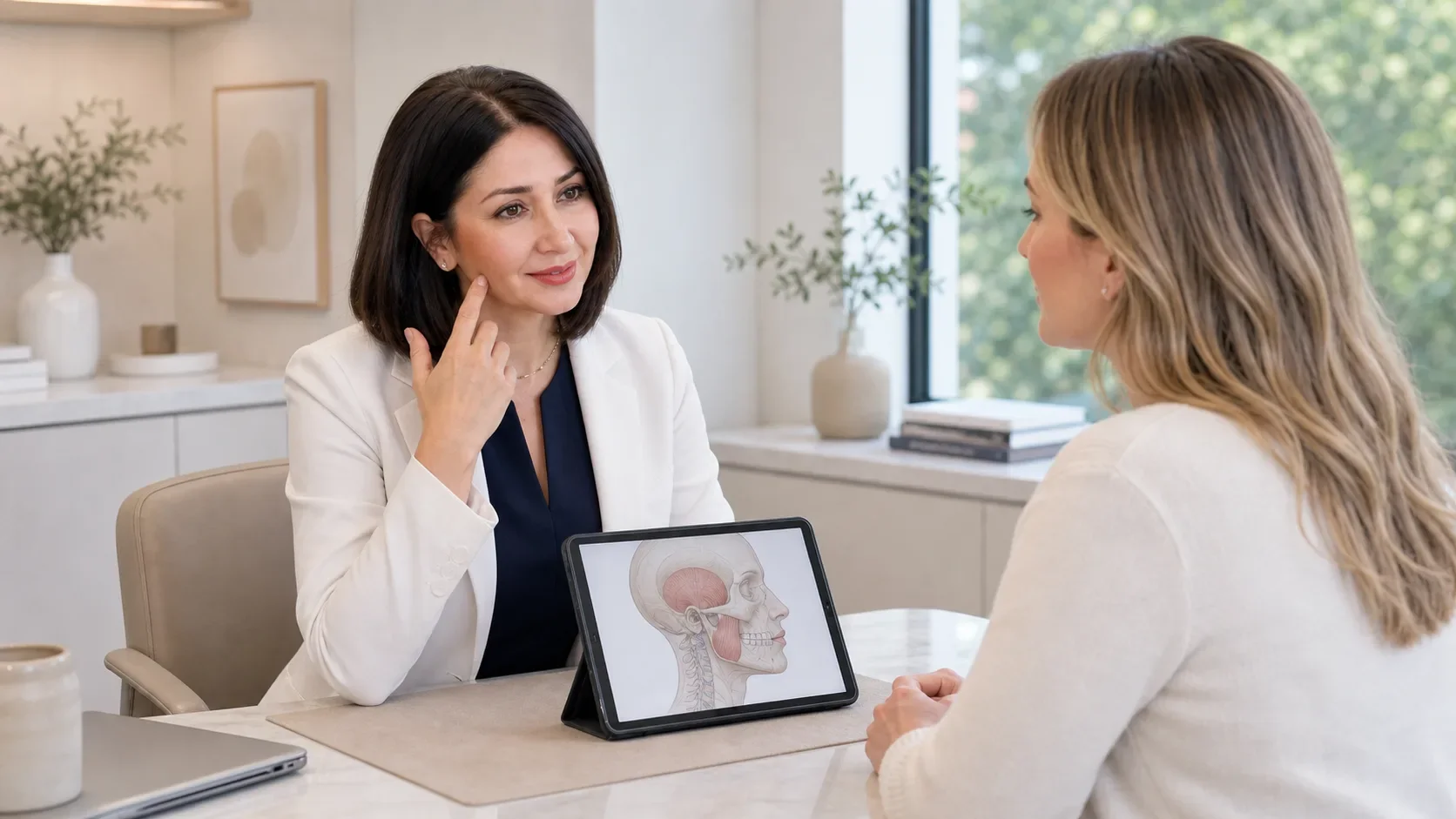
A good candidate is not simply someone with jaw pain. A better candidate is someone whose symptoms, anatomy, exam pattern, and goals suggest that targeted muscle relaxation may help.
At NeuroBeauty, candidacy is reviewed during consultation before treatment. If Botox does not appear appropriate, Dr. Sodeifi may recommend dental evaluation, medical evaluation, physical therapy, or another approach instead.
Who May Not Be a Candidate?
Botox may not be the right fit if:
The pain appears primarily joint-related rather than muscle-driven.
The main issue is dental, bite-related, or structural.
There is significant jaw locking, trauma, infection concern, or unexplained facial pain.
Another diagnosis needs evaluation first.
Expectations are unrealistic.
Reducing masseter strength could create unwanted chewing weakness or facial imbalance.
A more conservative dental or medical approach should be tried first.
This is one reason evaluation matters. The right treatment starts with understanding what is actually driving the symptoms.
Botox, Night Guards, and Dental Care: How Do They Fit Together?
Many patients with clenching or grinding have already tried a night guard or have been told to consider one. A night guard may help protect the teeth from grinding forces, but it does not necessarily stop the muscles from clenching.
Botox works differently. It does not protect the teeth directly. It may reduce the force of overactive chewing muscles in selected patients. For some people, dental care and Botox may be complementary. For others, dental evaluation should come first.
If there is tooth damage, bite change, jaw locking, significant joint symptoms, or concern for a dental source of pain, a dentist or TMJ-focused dental specialist may need to be involved. Botox should not be used as a shortcut around appropriate dental or medical evaluation. For a practical starting point, see when jaw clenching should be evaluated by a dentist, a physician, or both.
Does TMJ Botox Slim the Jaw?
Sometimes. If the masseter muscles are enlarged from chronic clenching or grinding, relaxing those muscles may gradually soften the lower-face contour. Some patients notice both functional and cosmetic changes over time.
That said, jaw slimming should not be assumed to be the primary goal. For many patients, the priority is jaw comfort, reduced clenching, and less masseter overuse. If lower-face contour is also a concern, it should be discussed openly before treatment so the plan accounts for both function and appearance.
This overlap is one reason physician-performed treatment matters. The jaw is a functional area. Treatment planning should consider chewing strength, facial symmetry, lower-face balance, and the patient's actual symptoms.
What to Expect From Treatment
Treatment is performed in the office after consultation and consent. The injection pattern depends on the muscles involved, the patient's anatomy, treatment goals, and whether the pattern appears masseter-driven.
Results are not immediate. Many patients begin noticing a change over several days, with fuller effect often developing over one to two weeks. Duration varies based on muscle strength, dose, anatomy, metabolism, and individual response.
For therapeutic concerns, the goal is usually improvement, not perfection. Some patients need a broader plan that may include dental care, stress reduction, physical therapy, headache management, or follow-up evaluation.
Risks and Limitations
Botox can be helpful for selected patients, but it is still a prescription medication and injection procedure. Possible side effects may include bruising, tenderness, headache, temporary chewing weakness, asymmetry, smile changes, dry mouth, incomplete response, or unwanted weakness in nearby muscles. Risks depend on anatomy, dose, placement, medical history, and the treatment area.
Botox does not cure bruxism. It does not repair the joint. It does not replace dental care when teeth, bite, appliances, or joint mechanics need evaluation. It may reduce muscle activity in selected patients when the clinical pattern supports treatment.
Why Physician-Performed TMJ Botox Matters
The jaw is not a casual treatment area. Treatment planning involves more than placing Botox into the side of the face.
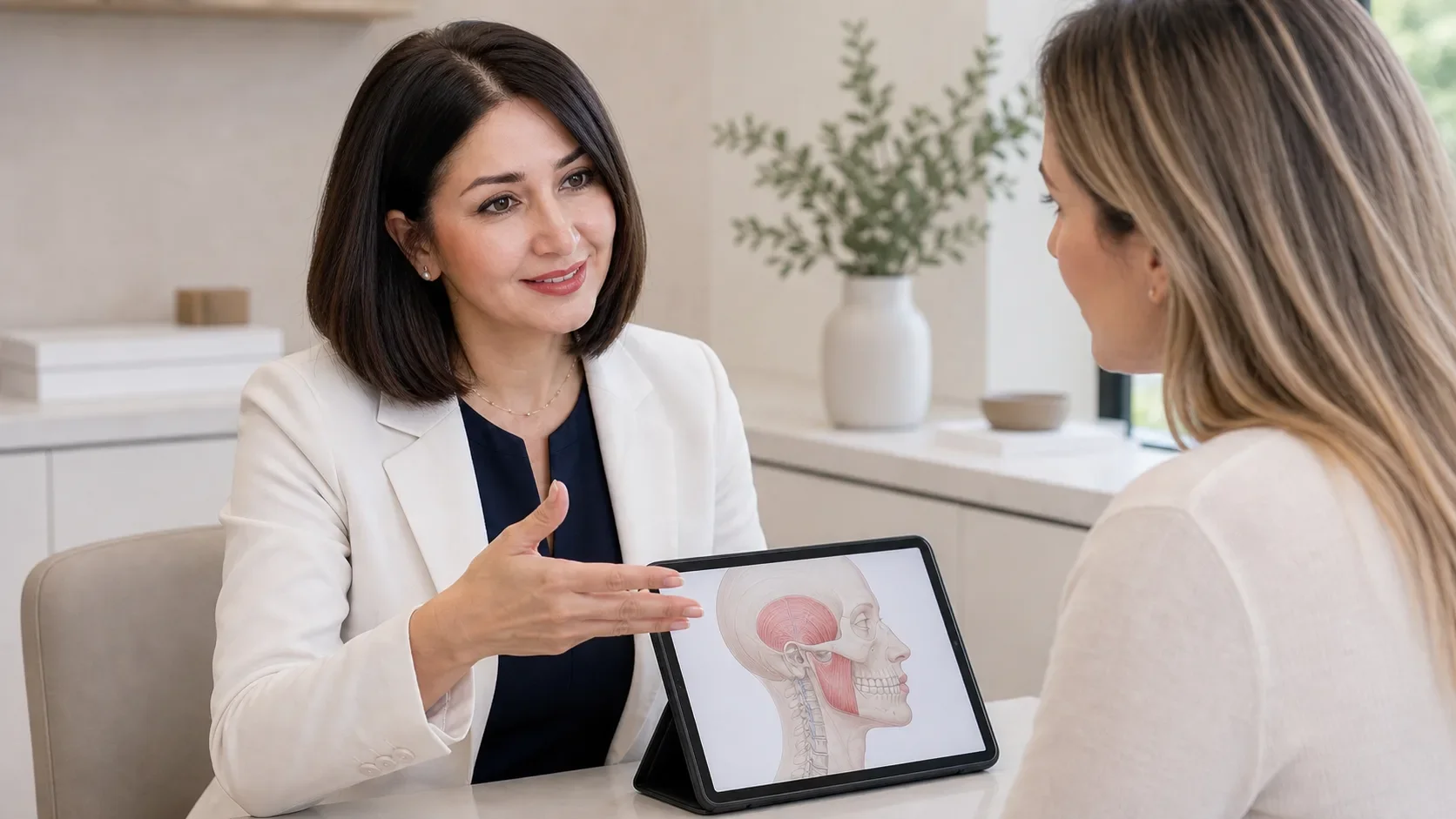
A physician-led evaluation helps clarify:
Whether symptoms appear muscle-driven.
Which muscles are involved.
Whether Botox is likely to address the concern.
Whether dental or medical evaluation should come first.
How treatment may affect chewing strength.
How treatment may affect facial shape or symmetry.
Which risks and limitations apply to the patient's anatomy.
At NeuroBeauty, all Botox treatments are performed exclusively by Dr. Sodeifi. Treatments are not delegated to NPs, PAs, estheticians, or technicians. That physician-only model is especially relevant when treatment affects both comfort and facial function.
For a broader overview of how Botox may be used for cosmetic and therapeutic concerns, including jaw clenching and chronic migraine, read Botox Beyond Wrinkles: Cosmetic and Therapeutic Uses in Walnut Creek.
Botox for Jaw Clenching in Walnut Creek
If jaw clenching, grinding, or masseter tension is affecting your comfort, schedule a consultation with NeuroBeauty. Dr. Sodeifi can evaluate whether the pattern appears muscle-driven, whether another evaluation should come first, and whether Botox is a reasonable option.
NeuroBeauty offers a neurologist-led, physician-only approach to therapeutic Botox, including selected jaw-clenching and masseter-overactivity concerns. You can also review current therapeutic Botox pricing before consultation.
To discuss candidacy, schedule a consultation with NeuroBeauty or call the office at (925) 726-3876.
Or call NeuroBeauty Clinic at (925) 726-3876 to schedule a consultation.
Frequently Asked Questions (FAQ) About Botox for TMJ Pain
-
It may help selected patients when jaw pain is being driven in part by clenching, grinding, or overactivity of the chewing muscles. Botox does not repair the temporomandibular joint or treat every cause of pain in the jaw area. A medical and dental evaluation may be needed to identify the main source of symptoms.
-
Botox may reduce the force generated by overactive jaw muscles, but it may not stop the grinding behavior completely. Patients with tooth wear or dental damage may still need a dentist's evaluation and protection such as a night guard.
-
Temporary jaw fatigue or reduced chewing strength can occur, especially with tougher foods. Dose or placement can also affect smile balance or facial expression. Careful patient selection, conservative dosing, and attention to jaw anatomy help reduce these risks, but they cannot eliminate them.
-
The effect develops gradually. Some patients notice reduced muscle contraction within several days, while fuller effect may take about one to two weeks. The timing and degree of symptom improvement vary.
-
No. The treatment area may overlap, but the goals differ. TMJ Botox in Walnut Creek focuses on selected muscle-related concerns such as jaw clenching, bruxism, and masseter tension. Cosmetic masseter slimming focuses on lower-face contour in appropriate candidates.
-
Duration varies, but the effect commonly lasts several months. Muscle strength, dose, anatomy, treatment pattern, and individual response can all influence the timeline.
-
Jaw muscle activity gradually returns as the medication's effect decreases. Clenching, tension, or soreness may also return. Repeat treatment is not automatic; it should be considered only when the prior response, side effects, examination, and treatment goals support another session.
-
Botox does not repair the joint, reposition a displaced disc, or correct a bite problem. Clicking, locking, limited opening, or joint-centered pain may need dental, oral and maxillofacial, or other medical evaluation. The National Institute of Dental and Craniofacial Research overview of TMD explains why jaw-joint and chewing-muscle problems may require different approaches.
-
All consultations and treatments are performed by Dr. Negar Sodeifi, MD, a neurologist. Treatment planning considers symptoms, jaw-muscle function, anatomy, dental history, prior care, and whether Botox is appropriate for the individual pattern.
Page details
Botox for TMJ Pain in Walnut Creek: What It May Help and Who It Fits
Learn when Botox may help jaw clenching, bruxism, masseter tension, and TMJ-related pain in Walnut Creek, and why careful physician evaluation matters.
Botox for TMJ Pain in Walnut Creek: What It May Help and Who It Fits
Learn when Botox may help jaw clenching, bruxism, masseter tension, and TMJ-related pain in Walnut Creek, and why careful physician evaluation matters.
Dr. Negar Sodeifi, MD, Physician and neurologist