
Botox for Migraine in Walnut Creek: Who May Be a Candidate and What to Expect
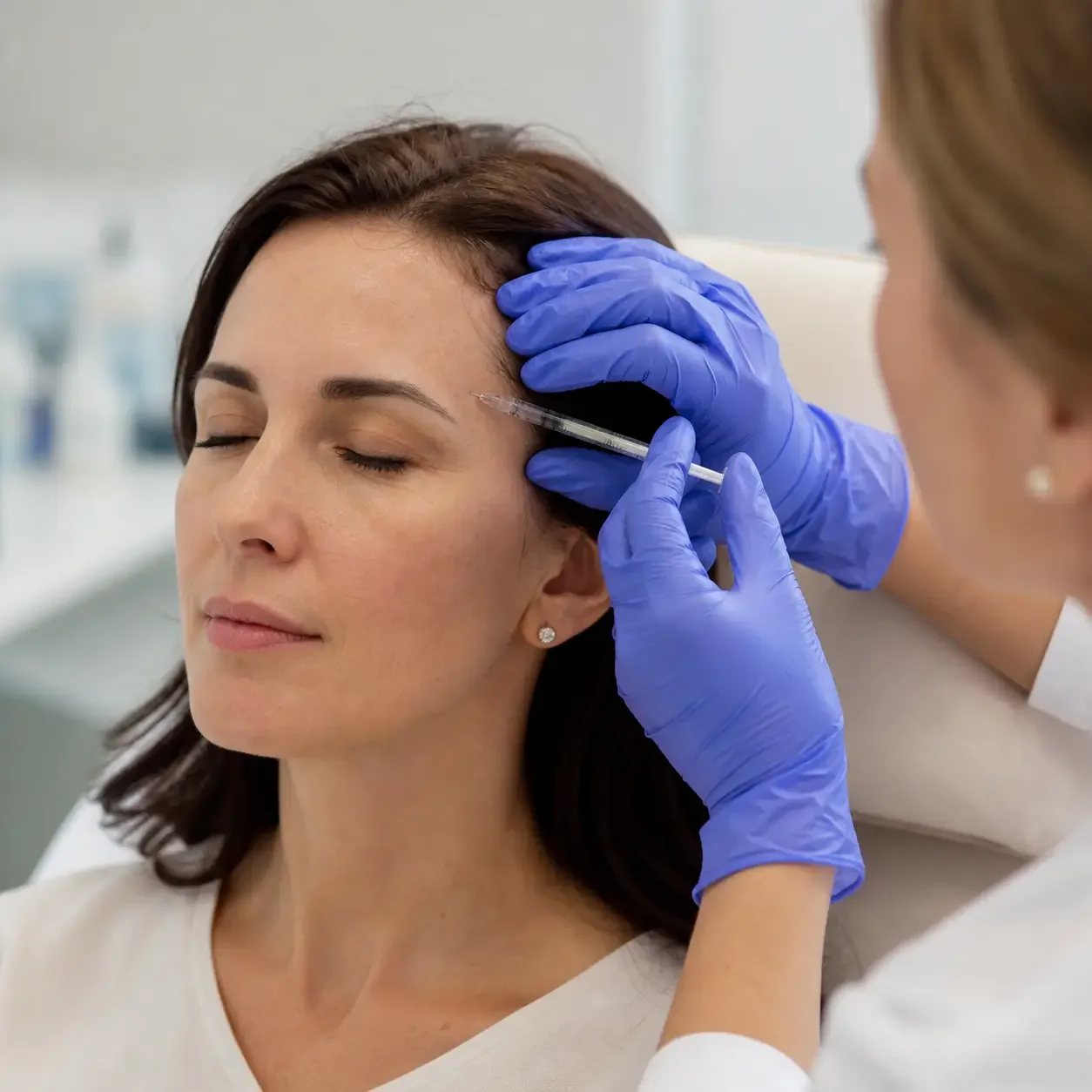
Botox is an FDA-approved preventive treatment for chronic migraine and may help reduce headache frequency in selected patients.
Botox for Migraine in Walnut Creek: Who May Be a Candidate and What to Expect
Migraine is not just a bad headache. For some people, migraine becomes frequent enough to interfere with work, family life, sleep, exercise, and basic daily routines. When headache days are frequent and the pattern fits chronic migraine, Botox may be considered as a preventive treatment.
At NeuroBeauty in Walnut Creek, therapeutic Botox treatment is provided by Dr. Negar Sodeifi, MD, a neurologist, for patients with an established diagnosis and referral. The referring clinician establishes the diagnosis and referral; NeuroBeauty receives the referral and provides physician-performed treatment. NeuroBeauty does not replace the referring clinician's diagnostic evaluation.
For service-specific information, see NeuroBeauty's dedicated page on chronic migraine Botox in Walnut Creek. The page describes the treatment visit, referral workflow, and safety considerations; diagnosis and referral remain with the treating clinician.
Quick Summary
Botox is used as a preventive treatment for selected adults with chronic migraine.
It is not a rescue medication for an active migraine attack.
It is generally considered for patients with frequent headache days, not occasional headaches.
A headache diary can help a referring clinician assess the pattern.
Migraine Botox is different from cosmetic Botox, even though the medication is related.
NeuroBeauty is cash-pay and does not bill insurance for therapeutic Botox.
What Counts as Chronic Migraine?
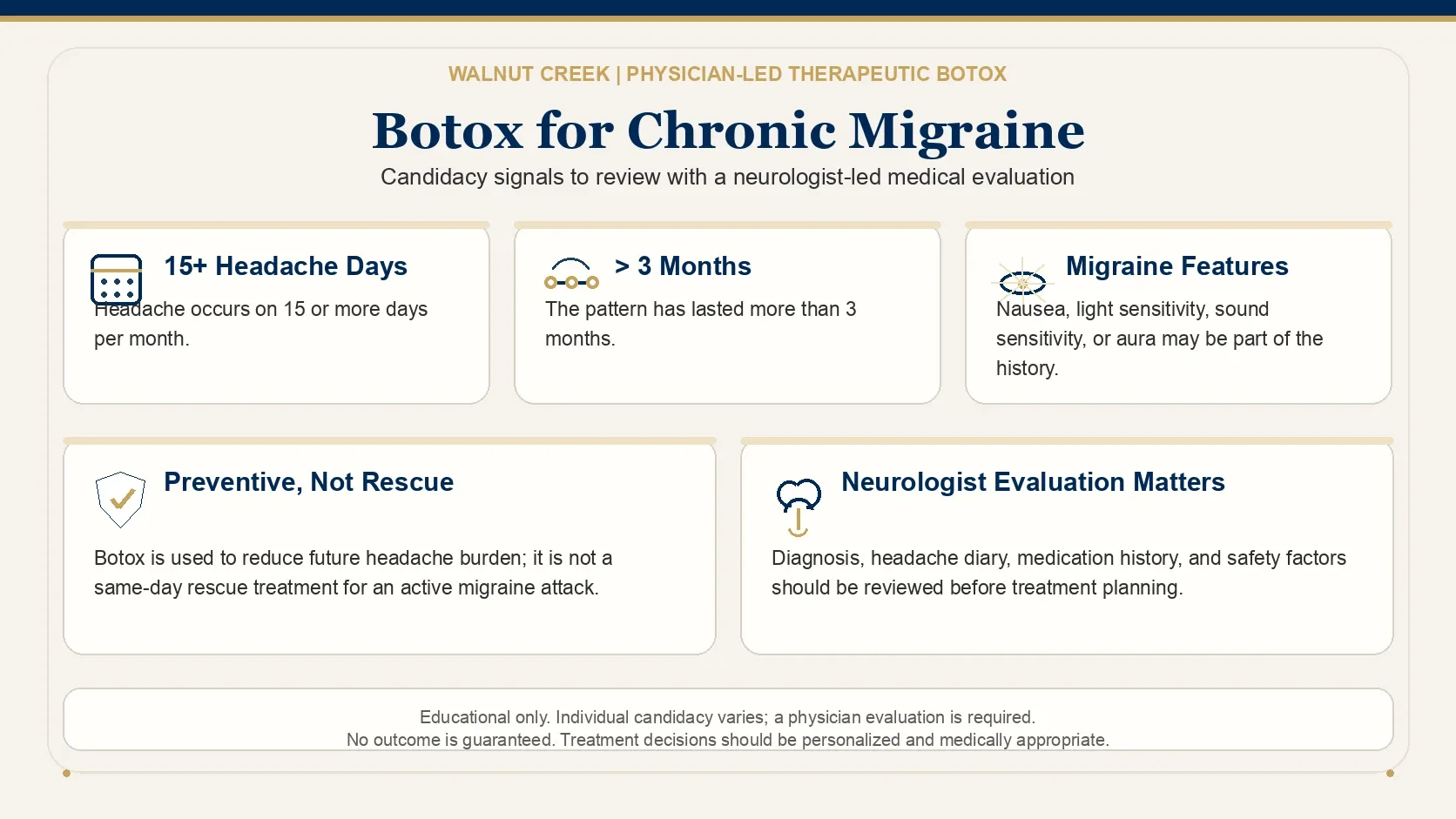
Chronic migraine is usually discussed when a person has headaches on 15 or more days per month for more than 3 months, with migraine features on at least some of those days. The exact diagnosis should be made by a qualified clinician, because not every frequent headache pattern is chronic migraine.
The National Institute of Neurological Disorders and Stroke explains that migraine can involve symptoms beyond head pain, including nausea, light sensitivity, sound sensitivity, and other neurologic symptoms. That is one reason evaluation matters before treatment.
| Headache pattern | What it may suggest | Is Botox usually considered? | Why evaluation matters |
|---|---|---|---|
| Chronic migraine pattern | Frequent headache days over months, with migraine features on a meaningful number of days. | Botox may be considered for selected adults when the clinical pattern fits chronic migraine. | The diagnosis, prior treatment history, medical conditions, and safety factors should be reviewed first. |
| Episodic migraine or occasional migraine | Migraine attacks occur, but headache days are less frequent. | Botox is generally not the standard option for occasional migraine. | Other acute or preventive strategies may be more appropriate depending on the pattern. |
| Tension-type or mixed headache pattern | Pressure, tightness, neck tension, or mixed symptoms may have more than one contributor. | Botox may or may not be relevant depending on the diagnosis and muscle involvement. | Neck pain, jaw tension, medication overuse, sleep, stress, and other causes may need separate evaluation. |
Botox for Migraine Is Preventive, Not a Rescue Treatment
Botox for chronic migraine is used to reduce the future burden of migraine over time. It is not meant to stop an active migraine attack the way a rescue medication might.
The official BOTOX Chronic Migraine patient information describes Botox as a preventive treatment for adults with chronic migraine. It also notes that it is not approved for adults with 14 or fewer headache days per month. That distinction is important, because many people searching for "Botox for headaches" may not actually have the headache pattern where Botox is usually considered.
Who May Be a Candidate for Migraine Botox?
Botox for migraine may be considered for an adult with an established chronic migraine diagnosis and referral when the referred treatment plan supports treatment.
Before a referred treatment visit, the treating clinician may review:
How many headache days you have per month.
How many days have migraine features such as nausea, light sensitivity, sound sensitivity, or throbbing pain.
How long headaches last.
Whether symptoms affect work, driving, sleep, exercise, or family life.
What medications or preventive treatments have already been tried.
Whether jaw tension, neck pain, medication overuse, sleep disruption, or other factors may be contributing.
Medical history, pregnancy or breastfeeding status, neuromuscular conditions, allergies, and medication safety considerations.
For NeuroBeauty treatment, the relevant starting point is an established diagnosis and referral. NeuroBeauty reviews available history and safety information for the treatment visit; treatment is provided only when clinically appropriate.
Who May Not Be a Candidate?
Botox may not be appropriate if the headache pattern does not fit chronic migraine, if another diagnosis needs evaluation first, or if the risks outweigh the potential benefit. It may also be inappropriate for patients with certain neuromuscular conditions, medication interactions, allergy history, infection at a proposed treatment area, or other medical factors that need physician review.
Some people need a different headache workup, a medication adjustment, imaging, dental evaluation, sleep evaluation, physical therapy, or another neurology-based approach before Botox should be considered. If a patient is better served by another path, that should be discussed plainly.
Why a Headache Diary Helps Before Consultation
A headache diary is one of the most useful tools before discussing Botox for chronic migraine. It gives the physician a clearer picture than memory alone, especially when headache days blur together over weeks or months.
Before consultation, consider tracking:
Headache days per month.
Migraine-feature days per month.
Headache duration.
Pain location and severity.
Nausea, light sensitivity, sound sensitivity, aura, dizziness, or other associated symptoms.
Medication use, including over-the-counter medications.
Missed work, reduced activity, or days spent resting because of migraine.
Potential triggers such as sleep changes, stress, alcohol, hormonal timing, dehydration, or skipped meals.
Neck tension, jaw clenching, or shoulder pain that tends to occur with headaches.
This information does not diagnose you by itself, but it can make the consultation more efficient and clinically useful.
What Treatment Usually Involves
When Botox is used for chronic migraine, treatment is typically performed in a standardized pattern across specific areas of the head and neck. The details should be individualized by the treating physician, but patients should understand that migraine Botox is a medical treatment plan, not the same as a cosmetic forehead visit.
Treatment is commonly repeated about every 12 weeks when it is appropriate to continue. Some patients notice change after the first cycle, while others need more than one treatment cycle before the response is clear. The goal is not to promise a specific result. The goal is to see whether treatment meaningfully reduces headache frequency, severity, duration, or migraine-related disability over time.
Botox for Migraine vs Cosmetic Botox
Cosmetic Botox and migraine Botox both involve botulinum toxin treatment, but the goals, evaluation, treatment pattern, and success measures are different.
Cosmetic Botox is usually focused on softening dynamic facial lines, such as frown lines, forehead lines, or crow's feet. Therapeutic Botox for chronic migraine is focused on reducing migraine burden in an appropriate medical context.
That distinction matters at NeuroBeauty because the clinic offers both cosmetic Botox in Walnut Creek and therapeutic Botox. In both settings, treatment is physician-performed. For migraine, the referring clinician establishes the diagnosis and referral; NeuroBeauty's role is to provide physician-performed treatment after referral, with attention to the referred plan, safety information, realistic expectations, and the treatment pattern. NeuroBeauty does not replace diagnostic evaluation.
For a broader overview of medical and cosmetic uses, see NeuroBeauty's guide to Botox beyond wrinkles.
Risks, Side Effects, and Limitations
Botox is a medical treatment and should not be described as risk-free. Possible side effects can include injection-site discomfort, bruising, temporary weakness, neck pain, headache, eyelid or brow heaviness, and other effects depending on the treatment area and individual response. Rare but serious reactions can occur, including spread-of-toxin effects or allergic reactions.
Pregnancy, breastfeeding, neuromuscular disorders, medication interactions, prior reactions to botulinum toxin, and certain medical histories should be discussed before treatment. Individual results vary, and Botox does not eliminate every migraine attack for every patient.
Cash-Pay Care vs Insurance-Based Migraine Botox
NeuroBeauty is a cash-pay clinic. Insurance is not billed through NeuroBeauty. If you are seeking insurance-based Botox treatment for chronic migraine, that is handled through Dr. Sodeifi's BASS neurology office, not through NeuroBeauty.
If you are considering cash-pay therapeutic treatment at NeuroBeauty, review the therapeutic Botox price list and confirm that you have an established diagnosis and referral before requesting a treatment visit. Pricing should be confirmed on the live pricing page or with the office, because treatment needs can vary.
Why Physician-Performed Treatment Matters After Referral
Frequent headaches can have overlapping causes. Migraine, tension-type headache, medication overuse headache, neck-related pain, jaw clenching, sleep problems, and other neurologic or medical conditions can coexist. That is why Botox should not be treated as a generic headache product.
At NeuroBeauty, the physician-only model is central. All therapeutic Botox treatment is performed by Dr. Sodeifi, not delegated to an injector, NP, PA, esthetician, or technician. After referral, the treatment visit is physician-performed and medically cautious, with attention to the referred plan, safety, realistic expectations, and the treatment pattern. NeuroBeauty does not replace the referring clinician's diagnostic evaluation.
If neck and shoulder muscle tension appears to be part of the picture, it may also be worth reviewing NeuroBeauty's information on Botox for neck and shoulder pain. If jaw clenching or bruxism is a major contributor, see the page on TMJ and masseter Botox. These are related therapeutic topics, but they are not the same diagnosis as chronic migraine.
Botox for Migraine in Walnut Creek and the East Bay
Patients in Walnut Creek, Lafayette, Pleasant Hill, Concord, Alamo, Danville, and the surrounding East Bay may be looking for physician-performed migraine Botox after referral. NeuroBeauty's role is to provide careful, referred treatment in a cash-pay setting.
If you are deciding between a medspa-style Botox visit and physician-performed treatment after referral, it may help to read NeuroBeauty's article on why to choose a physician for Botox in Walnut Creek. For migraine, the referring clinician establishes the diagnosis and referral; NeuroBeauty provides treatment when the referred plan and safety information support it.
Frequently Asked Questions (FAQ) About Botox For Migraines
-
Botox is used as a preventive treatment for adults with chronic migraine. It is not approved for every headache pattern, and it is not generally used for occasional migraine attacks. A physician evaluation is needed to determine whether the pattern fits.
-
Chronic migraine is generally discussed when headache days occur on 15 or more days per month for more than 3 months, with migraine features on a meaningful number of those days. The diagnosis should be made by a qualified clinician after reviewing the history and symptoms.
-
The medication is related, but the purpose and treatment plan are different. Cosmetic Botox focuses on facial movement and expression lines. Migraine Botox is a therapeutic treatment plan for selected adults with chronic migraine.
-
When used for chronic migraine, Botox is commonly repeated about every 12 weeks if treatment remains appropriate. The exact plan should be discussed with the treating physician.
-
Response is assessed over time. Some patients notice improvement after one treatment cycle, while others need more than one cycle before the pattern is clear. Tracking headache days before and after treatment is important.
-
No. Botox is not a universal headache treatment. It may be considered for selected adults with chronic migraine, but other headache types may require different evaluation and treatment.
-
Some patients with chronic migraine also have neck or shoulder tension. Whether Botox is relevant depends on the diagnosis, muscle pattern, and treatment goal. Neck tension should not automatically be assumed to be chronic migraine.
-
No. NeuroBeauty is cash-pay and does not bill insurance. Insurance-based chronic migraine Botox is handled through Dr. Sodeifi's BASS neurology office, not through NeuroBeauty.
Next Steps
If you have an established diagnosis and referral for chronic migraine Botox, NeuroBeauty can discuss whether a physician-performed treatment visit is appropriate for the referred plan and safety factors.
To learn more, visit the chronic migraine Botox page, review the therapeutic Botox pricing page, or request a referred treatment visit with NeuroBeauty.
Page details
Botox for Migraine in Walnut Creek: Who May Be a Candidate and What to Expect
Learn when Botox may be considered for chronic migraine, what treatment involves, and why neurologist-led evaluation matters in Walnut Creek.
Botox for Migraine in Walnut Creek: Who May Be a Candidate and What to Expect
Learn when Botox may be considered for chronic migraine, what treatment involves, and why neurologist-led evaluation matters in Walnut Creek.
Dr. Negar Sodeifi, MD, Physician and neurologist