

Marionette Lines Botox in Walnut Creek
Marionette lines are the lines or folds that extend downward from the corners of the mouth toward the chin. They can make the lower face appear tired, sad, or downturned, even when you feel relaxed. Some patients refer to this as a “sad face” appearance.
At NeuroBeauty Clinic in Walnut Creek, Botox for marionette lines and downturned mouth is performed exclusively by Dr. Negar Sodeifi, MD, a neurologist. Treatment is guided by facial anatomy, lower-face movement, muscle balance, and the goal of creating subtle improvement while preserving natural expression.
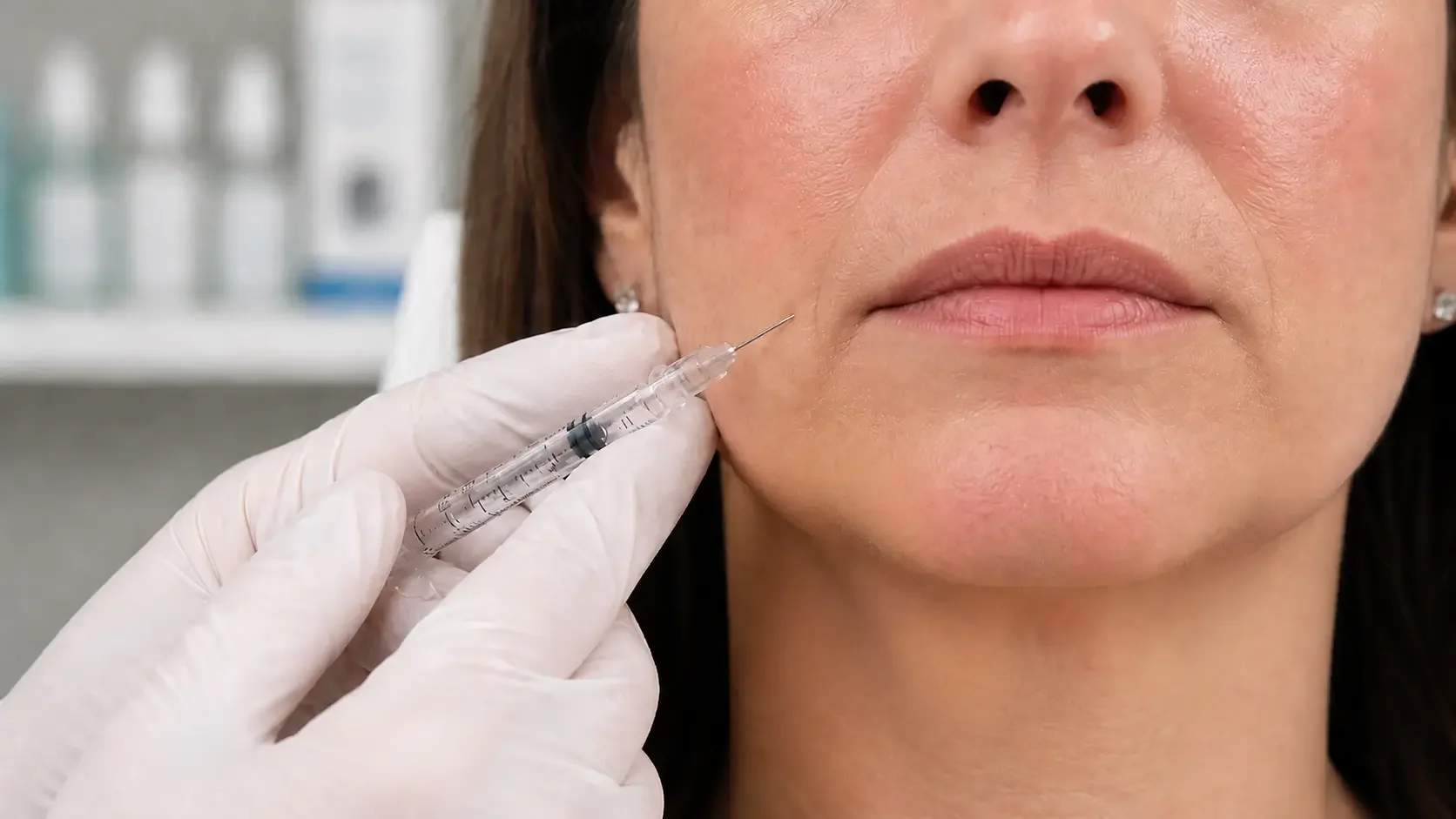
A physician-guided approach to lower-face Botox
The lower face requires a conservative and precise approach. The muscles around the mouth are involved in smiling, speaking, eating, lip movement, and facial expression. Small changes in Botox placement can affect how the mouth moves.
For this reason, marionette-line Botox should not be treated like a simple wrinkle treatment. Dr. Sodeifi evaluates whether the concern is mainly caused by downward-pulling muscle activity, facial volume loss, skin laxity, jawline structure, or a combination of factors.
When Botox is appropriate, the goal is usually to soften the downward pull near the corners of the mouth — not to freeze the lower face or erase every line.
What marionette-line Botox may help improve
Marionette-line Botox may help selected patients with:
Downturned corners of the mouth
A mild “sad face” or tense lower-face expression
Excessive downward pull from the depressor muscles
Early marionette-line changes related to muscle movement
Lower-face balance when combined with other treatments
The goal is subtle refinement. The best result is usually a face that looks more relaxed and balanced, not obviously treated.
Why marionette lines develop
Marionette lines can develop for several reasons. In some patients, the corners of the mouth are pulled downward by muscle activity, especially from the depressor anguli oris muscles. In others, the lines are more related to volume loss, skin laxity, collagen changes, jawline support, or facial structure.
This distinction matters. Botox works on muscle movement. It does not replace lost volume or tighten loose skin. If the main issue is structural support or deeper folds, filler or another treatment plan may be more appropriate.
How Botox works for downturned mouth
Botox can be placed in small, targeted doses to reduce the activity of muscles that pull the mouth corners downward. In selected patients, relaxing this downward pull may allow the mouth corners to rest in a more neutral position.
Treatment planning depends on several factors, including:
Mouth-corner position at rest
Strength of downward-pulling muscles
Smile pattern
Chin movement
Lip movement
Depth of marionette folds
Skin laxity and volume support
Facial asymmetry
Because lower-face muscles are closely connected, conservative dosing is important. The goal is to preserve normal smile, speech, and mouth movement.
Botox vs. filler for marionette lines
Botox and filler treat different causes of marionette lines.
Botox may help when the concern is mostly downward muscle pull at the corners of the mouth.
Filler may be more appropriate when the concern is deeper folds, volume loss, or loss of structural support around the mouth, chin, or jawline.
Some patients may benefit from one approach. Others may need a combined plan. During consultation, Dr. Sodeifievaluates whether Botox, filler,skin-quality treatment, or a more conservative “do nothing yet” approach makes the most sense for your anatomy and goals.
Pricing
Marionette-line Botox pricing depends on anatomy, muscle strength, dosing, and whether treatment is performed alone or as part of a broader lower-face plan.
For the most current pricing, please see the Botox pricing page or contact the office at (925) 726-3876.
Who may be a good candidate
Marionette-line Botox may be appropriate for patients who have mild downturned mouth corners or a sad-face expression related to muscle pull.
It may be a good fit for patients who:
Notice the corners of the mouth turning downward
Feel their expression looks sad, tired, or tense at rest
Have mild marionette-line changes related to movement
Want a subtle, natural-looking improvement
Prefer physician-performed treatment and conservative dosing
Candidacy is determined during consultation based on anatomy, goals, facial movement, medical history, and treatment expectations. NeuroBeauty’s consultation process emphasizes individualized recommendations based on anatomy, movement patterns, skin quality, prior treatments, medical history, and safety considerations.
Who may not be a good candidate
Botox may not be the best choice if marionette lines are mainly caused by deep folds, significant volume loss, skin laxity, or structural descent. In those situations, Botox alone may produce little improvement.
Patients who need strong, predictable correction of deeper marionette folds may be better candidates for dermal filler or a combined lower-face plan. Patients with certain neuromuscular conditions, prior complications, significant asymmetry, or unrealistic expectations may need a more cautious approach or may not be candidates.
What marionette-line Botox cannot do
Botox cannot lift sagging skin, restore lost volume, erase deep folds, or replace lower-face filler when filler is the more appropriate treatment. It also cannot produce a surgical lift or a dramatic reshaping of the mouth.
Botox may help soften the muscular component of a downturned expression, but results vary. The goal is conservative improvement, not transformation.
What to expect
Treatment is performed in-office after Dr. Sodeifievaluates your lower-face movement, mouth-corner position, smile pattern, and marionette-line anatomy. Injections are typically brief and use small, targeted doses.
Most patients begin to notice Botox changes within several days, with final cosmetic results typically visible by about 10–14 days. Cosmetic Botox commonly lasts about 3–4 months, although duration varies by metabolism, muscle strength, treatment area, and dose.
Common side effects may include temporary redness, swelling, soreness, or bruising at injection sites. Serious complications are uncommon in cosmetic dosing but are possible with any botulinum toxin product. Because this is a lower-face treatment, careful dosing is important to avoid unwanted effects on smile or mouth movement.
Related treatments
Patients considering marionette-line Botox may also be interested in:
SkinPen Microneedling for skin texture and fine lines
PRP Microneedling for regenerative skin-quality support
The best plan depends on whether the concern is muscle pull, volume loss, skin quality, facial structure, or a combination.
Frequently Asked Questions (FAQ) About Botox for Marionette Lines
-
Marionette lines are the lines or folds that extend downward from the corners of the mouth toward the chin. They can create a sad, tired, or downturned appearance in the lower face.
-
-
“Sad face” Botox usually refers to small, targeted Botox doses placed to reduce downward pull near the mouth corners. The goal is to help the mouth rest in a more neutral position, not to change the smile dramatically.
-
Usually not. Botox can soften the muscle-pull component, but deep marionette folds often involve volume loss, skin laxity, and structural support. Filler or another treatment plan may be more appropriate.
-
It can if placed incorrectly or dosed too strongly. This is why conservative dosing and precise anatomy-guided placement are important in the lower face.
-
Many patients notice cosmetic Botox results for about 3–4 months, although duration varies based on metabolism, muscle strength, dose, and treatment area.
-
It depends on the cause. Botox may help muscle-related downturned corners. Filler may be better for deeper folds or volume loss. Some patients benefit from a combined plan, while others are better served by one treatment only.
Schedule a consultation
NeuroBeauty is located in Walnut Creek, California, and serves patients from Lafayette, Danville, Alamo, San Ramon, Pleasant Hill, Concord, and the greater East Bay. If you are considering Botox for marionette lines or a downturned-mouth appearance in Walnut Creek, NeuroBeauty Clinic offers a physician-performed, anatomy-guided approach focused on subtle, natural-looking results.
Call (925) 726-3876 or request a consultation online, and our office will contact you directly to discuss availability and next steps.
Page details
Marionette Lines Botox in Walnut Creek
Physician-performed Botox for marionette lines and downturned mouth in Walnut Creek. Anatomy-guided treatment to soften sad-face expression and improve lower-face balance.
Marionette Lines Botox in Walnut Creek
Physician-performed Botox for marionette lines and downturned mouth in Walnut Creek. Anatomy-guided treatment to soften sad-face expression and improve lower-face balance.