

Botox for Blepharospasm and Eye Twitching in Walnut Creek
Blepharospasm is a neurologic movement disorder that causes involuntary blinking, eyelid twitching, or eyelid spasms. In more significant cases, the eyelids may close forcefully or repeatedly, interfering with reading, driving, screen use, and daily comfort.
At NeuroBeauty Clinic in Walnut Creek, Botox for blepharospasm and involuntary eyelid spasms is performed exclusively by Dr. Negar Sodeifi, MD, a neurologist. Treatment is guided by eyelid anatomy, facial muscle function, spasm pattern, eye symptoms, neurologic history, and safety considerations.
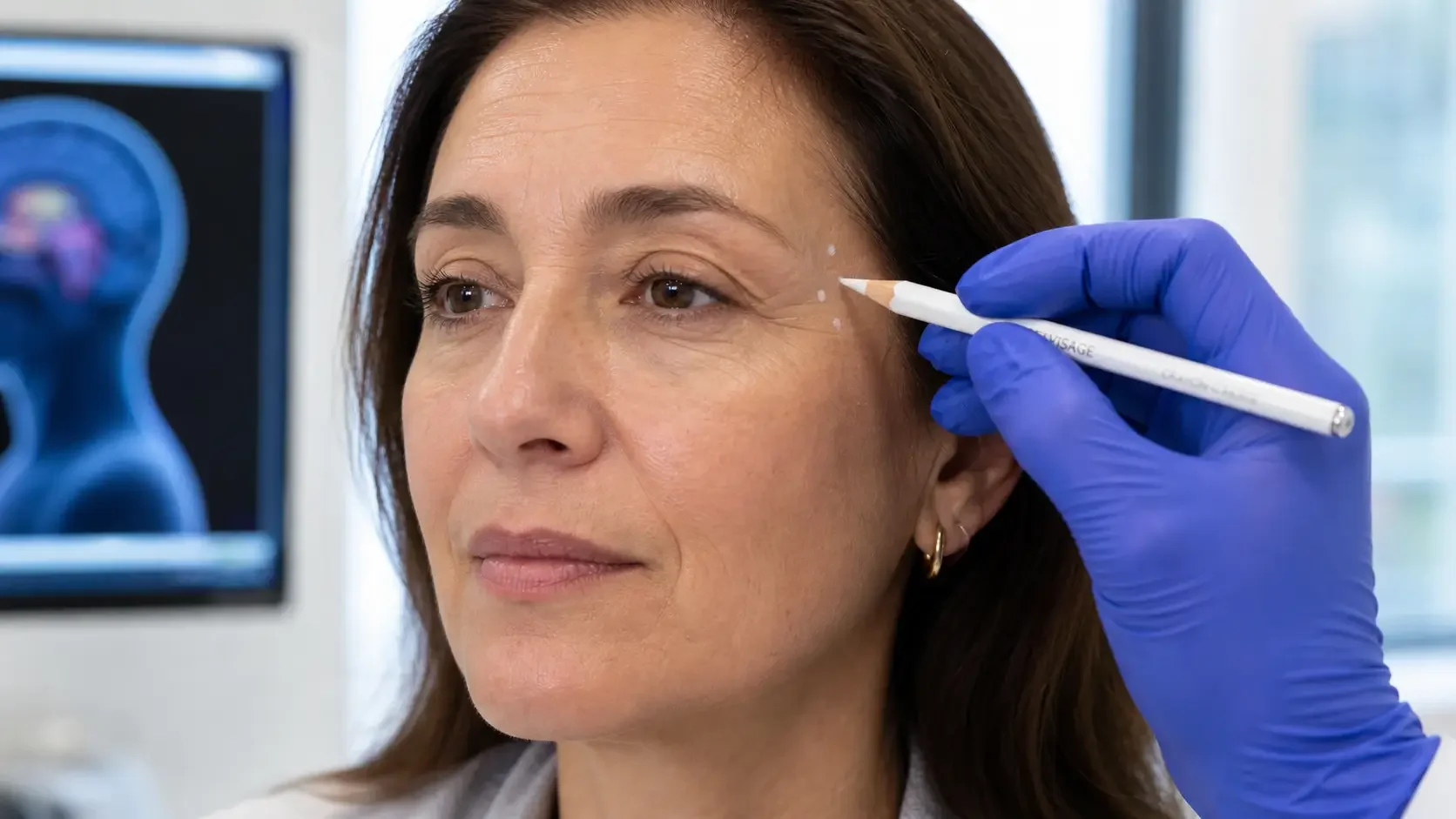
A neurologist-guided approach to eyelid spasm
Blepharospasm is not the same as an occasional eyelid twitch from stress, fatigue, caffeine, or dry eye. Many mild eyelid twitches are temporary and resolve on their own.
Blepharospasm is more persistent and involves involuntary contraction of the muscles around the eyes. Some patients experience frequent blinking. Others have spasms strong enough to partially or fully close the eyelids.
Because symptoms around the eyes can come from several different causes, evaluation matters. The goal is to determine whether the pattern is consistent with blepharospasm, hemifacial spasm, dry eye-related irritation, medication effects, facial nerve involvement, or another condition.
What blepharospasm may cause
Blepharospasm symptoms can vary. Patients may notice:
Frequent blinking
Eyelid twitching
Involuntary eyelid closure
Eyelid squeezing or spasms
Eye irritation
Light sensitivity
Difficulty keeping the eyes open
Functional difficulty with reading, driving, or computer work
Facial muscle involvement in some cases
The key feature is that the movements are involuntary and may interfere with comfort or function.
How Botox works for blepharospasm
Therapeutic Botox temporarily weakens overactive muscles by reducing nerve signaling at the neuromuscular junction. For blepharospasm, very small amounts are placed into selected muscles around the eyelids and eyes to reduce involuntary contraction.
This is different from cosmetic Botox for crow’s feet. The medication may be similar, but the goal, placement, dosing, and safety considerations are different.
Blepharospasm Botox is focused on function: reducing abnormal eyelid spasm while preserving natural eye closure, facial expression, and eyelid function as much as possible.
Blepharospasm vs. ordinary eye twitching
Occasional eyelid twitching is common. It may be related to stress, fatigue, dry eye, caffeine, eye strain, or irritation. This type of twitching often improves with time, rest, lubrication, or addressing triggers.
Blepharospasm is more persistent and can cause repeated involuntary blinking, squeezing, or eyelid closure. It may be a form of focal dystonia affecting the muscles around the eyes.
This distinction matters because treatment depends on the underlying cause.
Blepharospasm vs. hemifacial spasm
Blepharospasm and hemifacial spasm can both involve twitching around the eye, but they are different conditions.
Blepharospasm usually involves involuntary eyelid spasms and blinking, often affecting both eyes.
Hemifacial spasm usually involves involuntary contractions on one side of the face and may include the eyelid, cheek, mouth corner, and other facial muscles.
The treatment areas may overlap, but the diagnosis, muscle pattern, and treatment plan are different. Dr. Sodeifievaluates the pattern before recommending treatment.
Who may be a good candidate
Therapeutic Botox may be appropriate for selected patients with blepharospasm or involuntary eyelid spasms that interfere with comfort or function.
It may be a good fit for patients who:
Have persistent eyelid spasms or involuntary blinking
Have difficulty keeping the eyes open
Experience eyelid closure that interferes with daily activities
Have symptoms consistent with benign essential blepharospasm
Have eyelid spasm associated with certain dystonia or facial nerve patterns
Want treatment performed by a neurologist
Understand that treatment is individualized and results vary
Candidacy is determined during consultation based on symptoms, exam findings, eye history, neurologic history, medication history, and safety considerations.
Who may not be a good candidate
Botox may not be appropriate for every patient with eye twitching. If the twitching is brief, mild, and related to stress, caffeine, dry eye, lack of sleep, or eye irritation, conservative measures or eye evaluation may be more appropriate first.
Botox may also not be appropriate for patients with active infection at the injection site, allergy to botulinum toxin ingredients, certain neuromuscular disorders, significant dry eye or corneal exposure risk, eyelid weakness, or other medical factors that increase risk.
If symptoms suggest another diagnosis, such as hemifacial spasm, facial nerve involvement, medication effect, or another neurologic condition, the treatment plan may need to be adjusted.
What Botox for blepharospasm cannot do
Botox does not cure blepharospasm permanently. It does not treat every cause of eye twitching, replace a full eye or neurologic evaluation when indicated, or guarantee complete elimination of spasms.
It may reduce involuntary eyelid contraction in appropriately selected patients. Treatment usually needs to be repeated periodically if benefit is seen.
What to expect
Your visit begins with a focused review of your symptoms, eye history, neurologic history, and spasm pattern. Dr. Sodeifievaluates which muscles appear involved and whether Botox is appropriate.
Treatment typically involves small injections around selected eyelid and periocular muscles. The dose and placement are customized to reduce spasm while minimizing eyelid weakness, dry eye symptoms, asymmetry, or vision-related side effects.
Some patients begin noticing improvement within several days, with fuller effect developing over the first 1–2 weeks. Duration varies, but effect commonly lasts around 3 months.
Safety considerations
Botox around the eyes requires careful dosing and precise placement. The goal is to reduce involuntary spasm while minimizing unwanted effects on eyelid position, eye closure, and eye comfort.
Possible side effects may include:
Injection-site discomfort
Bruising or tenderness
Eyelid drooping
Eyelid swelling
Dry eye or eye irritation
Watery eyes
Blurred vision
Double vision
Facial asymmetry
Incomplete response
Rare but serious botulinum toxin complications can occur, including distant spread of toxin effect with generalized weakness, swallowing difficulty, breathing difficulty, or other systemic symptoms. Patients with neuromuscular disorders or other risk factors may require extra caution.
Pricing
Pricing for blepharospasm Botox depends on diagnosis, treatment pattern, dose, and complexity.
Therapeutic Botox at NeuroBeauty Clinic is self-pay. Consultation or referral may be required to determine candidacy and expected benefit.
Please contact the office at (925) 726-3876 for current therapeutic Botox pricing.
Related treatments
Patients considering blepharospasm Botox may also be interested in:
Trigeminal Neuralgia / Facial Pain Evaluation
Cosmetic Botox for Crow’s Feet, if appropriate and separate from therapeutic treatment planning
The best plan depends on diagnosis, spasm pattern, eye symptoms, facial nerve involvement, and treatment goals.
Frequently Asked Questions About Botox treatment For Blepharospasm
-
Blepharospasm is a neurologic condition involving involuntary eyelid blinking, twitching, squeezing, or eyelid closure. It can interfere with vision-related daily activities when symptoms are more severe.
-
No. Occasional eyelid twitching is common and may be related to stress, fatigue, caffeine, dry eye, or irritation. Blepharospasm is more persistent and involves involuntary eyelid muscle contraction.
-
Yes. Botox is indicated for blepharospasm associated with dystonia, including benign essential blepharospasm or VII nerve disorders, in patients 12 years of age and older.
-
Botox reduces excessive contraction of selected muscles around the eyelids. This may reduce involuntary blinking, squeezing, or eyelid closure in appropriately selected patients.
-
No. The medication may be similar, but the goal and placement are different. Blepharospasm Botox is a therapeutic treatment focused on eyelid spasm and function. Crow’s feet Botox is cosmetic and focuses on expression lines.
-
Duration varies, but benefit commonly lasts around 3 months. Repeat treatment timing depends on symptom response, dose, safety, and the treatment plan.
-
Possible risks include bruising, eyelid drooping, dry eye, eye irritation, blurred vision, double vision, asymmetry, incomplete response, and rare systemic botulinum toxin effects.
-
No. Botox does not permanently cure blepharospasm. It may help control symptoms for a period of time, and repeat treatments may be needed if benefit is seen.
-
Yes. Therapeutic Botox should be tailored to the diagnosis, anatomy, muscle pattern, and treatment goals.
-
Some insurance plans cover Botox for certain therapeutic indications, but NeuroBeauty Clinic does not bill insurance for these services. Therapeutic Botox at this location is self-pay.
Schedule a consultation
NeuroBeauty is located in Walnut Creek, California, and serves patients from Lafayette, Danville, Alamo, San Ramon, Pleasant Hill, Concord, and the greater East Bay. If you are looking for therapeutic Botox treatment for blepharospasm or involuntary eyelid spasms in Walnut Creek, NeuroBeauty Clinic offers neurologist-performedevaluation and treatment planning focused on anatomy, diagnosis, safety, and individualized care.
Call (925) 726-3876 or request a consultation online, and the office will contact you directly to discuss availability and next steps.
Page details
Botox for Blepharospasm and Eye Twitching in Walnut Creek
Neurologist-performed Botox for blepharospasm and involuntary eyelid spasms in Walnut Creek. Physician-led evaluation for eye twitching and eyelid closure.
Blepharospasm Botox in Walnut Creek
Neurologist-performed Botox for blepharospasm and involuntary eyelid spasms in Walnut Creek. Physician-led evaluation for eye twitching and eyelid closure.