
Microneedling with PRP in Walnut Creek: What It Does, Who It Helps, and What to Expect
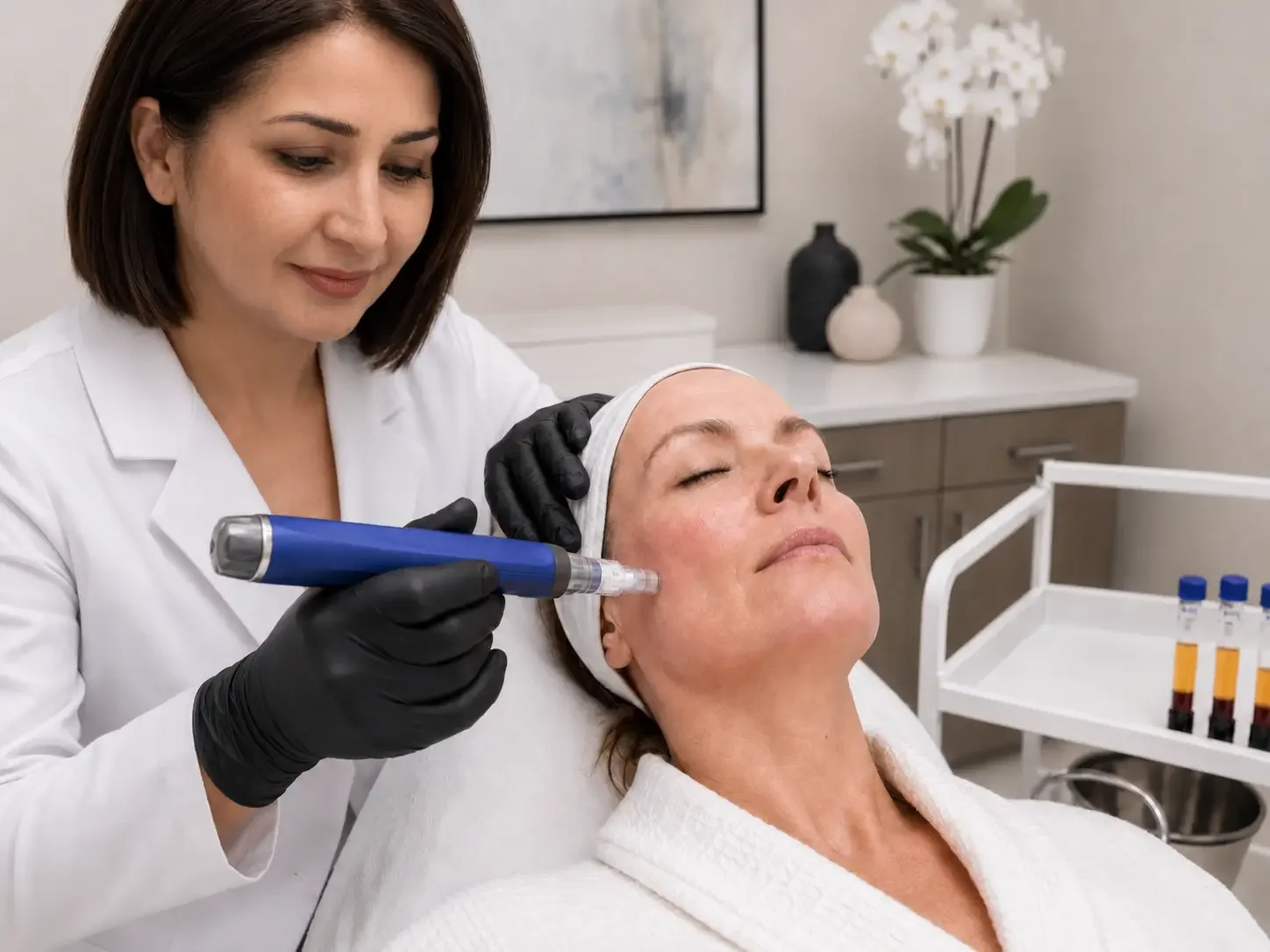
Microneedling with PRP helps support gradual collagen remodeling and improve the appearance of skin texture, dullness, fine lines, and acne-scar texture in selected patients.
Many patients notice that their skin changes gradually over time.
Many patients notice skin-quality changes gradually. Skin may look less bright, feel less smooth, or appear more tired than it used to. Fine lines may become more visible. Pores may look larger. Texture may feel rougher. Acne scars or uneven tone may become harder to ignore.
For many women in their 30s, 40s, and 50s, the goal is not to look dramatically different. The goal is healthier-looking skin: smoother texture, a fresher surface, and gradual improvement without adding facial volume or changing facial contours.
Microneedling with PRP is one option for selected patients who want skin rejuvenation focused on texture, collagen remodeling, fine lines, pores, and selected acne-scar concerns. At NeuroBeauty in Walnut Creek, SkinPen microneedling with PRP is performed in a physician-led setting by Dr. Negar Sodeifi, MD.
Quick summary
Treatment: SkinPen microneedling with PRP
Best for: texture, dullness, fine lines, pores, and selected acne-scar concerns
Downtime: usually redness and sensitivity; varies by patient
Results: gradual, often developing over weeks to months
Best approach: series-based treatment plan when appropriate
Performed by: Dr. Negar Sodeifi, MD
Interested in SkinPen microneedling with PRP?
Why skin can lose its glow with age?
Skin aging is not caused by one single change.
Over time, collagen and elastin support may decrease, skin-cell turnover can slow, sun exposure can accumulate, and the skin may become less smooth or luminous. Many patients notice these changes as:
dullness
rougher texture
fine lines
larger-looking pores
uneven tone
acne-scar texture
less “bounce” or freshness in the skin
This is one reason that skin may still look tired even when the face does not necessarily need filler or a more aggressive treatment. In some patients, the goal is not to change the shape of the face. The goal is to improve the quality of the skin itself.
What Is SkinPen Microneedling?
Microneedling is a minimally invasive treatment that uses fine needles to create controlled micro-injuries in the skin. These micro-injuries stimulate the skin's repair response. Over time, that response may support new collagen and elastin production, which can help improve the appearance of rough texture, fine lines, enlarged-looking pores, and selected acne-scar concerns.
SkinPen is a professional microneedling device designed for controlled treatment depth in a clinical setting. The goal is not to injure the skin aggressively. The goal is to create a precise, controlled stimulus so the skin can remodel gradually.
This is different from at-home rollers or casual "skin needling." Professional microneedling allows more controlled treatment planning, sterile technique, appropriate depth selection, and medical screening. That matters because microneedling is still a procedure involving the skin barrier.
What Does PRP Add to Microneedling?
PRP stands for platelet-rich plasma. It is prepared from a small sample of your own blood. The blood is processed so that the platelet-rich portion can be separated and used during treatment.
Platelets contain growth factors and signaling proteins involved in the body's natural healing response. When PRP is combined with microneedling, it may provide a biologic adjunct to the skin's repair environment. The microneedling creates microchannels in the skin, and PRP is applied during the treatment process.
PRP is not magic, and it does not guarantee a result. For selected patients, however, it may be a useful addition to microneedling when the goal is gradual, natural-looking improvement in skin quality.
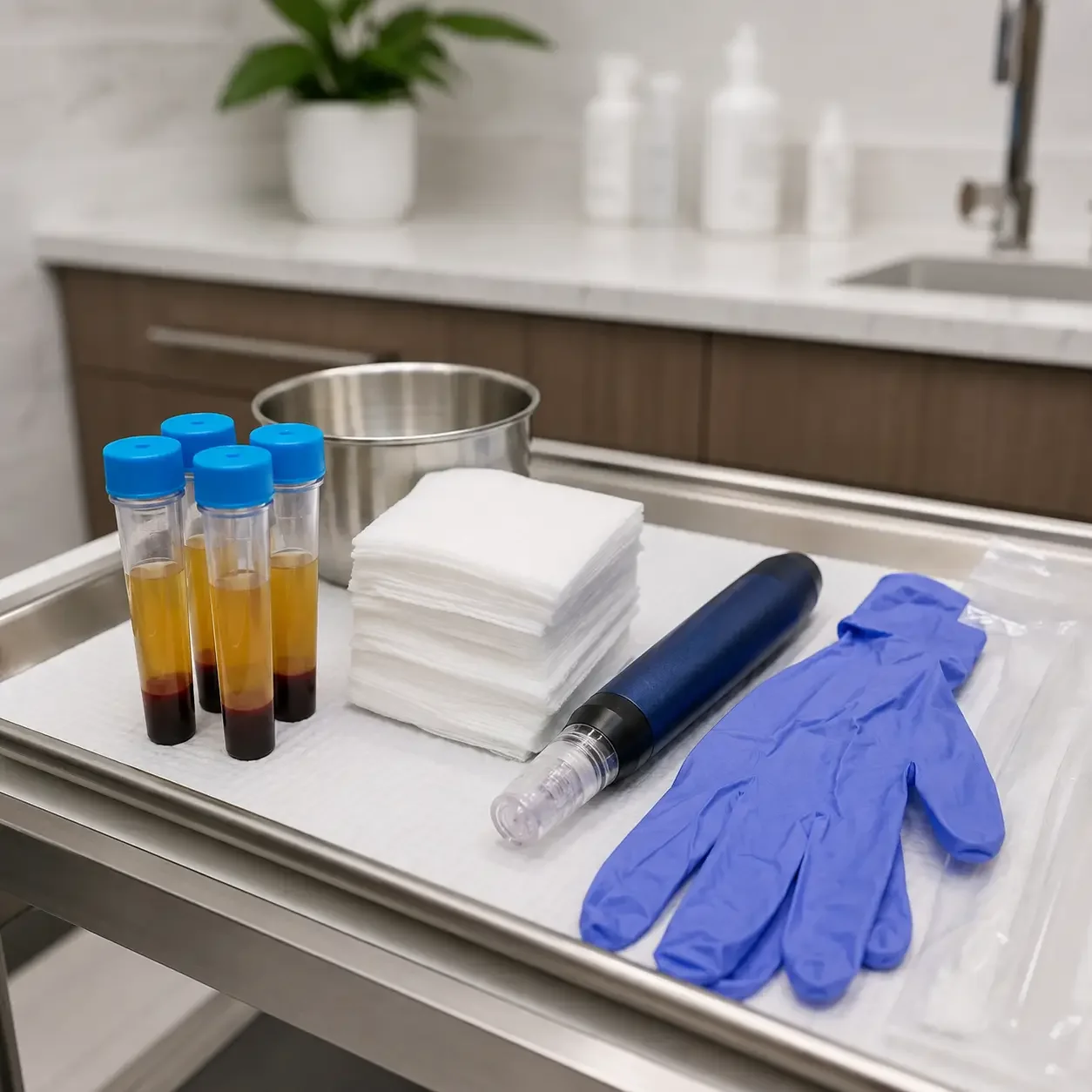
What does PRP add to microneedling?
PRP is prepared from a small sample of the patient’s own blood and may be applied during microneedling as a biologic adjunct to support the skin’s repair environment. Results vary, and PRP is recommended based on candidacy, goals, and treatment plan.
Microneedling with PRP vs microneedling alone
Some patients may do well with microneedling alone. Others may choose to add PRP because they want additional biologic support for the skin's repair response.
The right choice depends on:
Skin quality.
Degree of texture change.
Acne-scar history.
Age-related collagen changes.
Downtime tolerance.
Treatment goals.
Budget and treatment plan.
PRP should not be treated as something every patient automatically needs. It should be discussed as part of an individualized plan.
How microneedling with PRP compares with other treatments
Different treatments address different concerns. Microneedling with PRP is focused mainly on skin quality, texture, and collagen remodeling. Botox and fillers work differently.
Microneedling alone
Microneedling uses controlled micro-injuries to support collagen remodeling. It may help improve the appearance of rough texture, fine lines, pores, and selected acne-scar concerns.
Microneedling with PRP
Microneedling with PRP adds platelet-rich plasma prepared from the patient’s own blood. PRP provides an additional biologic adjunct to support the skin’s repair environment.
Dermal fillers
Dermal fillers are used to restore or refine facial volume and structure. They address contour and volume rather than skin texture.
The right choice depends on the concern.
For some patients, the main issue is skin texture. For others, it may be expression lines, volume loss, or a combination of concerns. A consultation helps determine which treatment fits your skin, anatomy, and goals.
What skin concerns may microneedling with PRP help?
Microneedling with PRP may help improve the appearance of:
Dull skin.
Rough texture.
Fine lines.
Enlarged-looking pores.
Uneven tone.
Selected acne-scar texture.
Early skin aging.
Mild crepey texture.
Overall skin quality.
It is especially appealing for patients who want gradual skin rejuvenation without adding volume or changing facial shape. Unlike filler, microneedling with PRP is not primarily about replacing volume. Unlike Botox, it is not primarily about relaxing overactive muscles. The treatment is focused more on skin quality, collagen support, and gradual improvement in texture and radiance.
Who may be a good candidate?
Microneedling with PRP may be worth considering if you want gradual improvement in skin texture and brightness without looking overdone.
It may be a good fit for patients who have:
dull or tired-looking skin
mild fine lines
acne-scar texture
roughness or uneven texture
enlarged-looking pores
early collagen loss
interest in natural-looking skin rejuvenation
realistic expectations about gradual results
A good candidate understands that this is not an instant transformation. The goal is progressive improvement in skin quality over time.
Who may not be a good candidate?
Microneedling with PRP is not right for everyone.
It may not be appropriate if you have:
Active infection in the treatment area.
Significant active inflammatory acne or open lesions.
Certain bleeding or clotting concerns.
Poor wound-healing history.
Certain medical conditions that affect healing.
A history of problematic scarring or keloids.
Unrealistic expectations.
A desire for immediate dramatic tightening.
A skin concern that would be better treated with another modality.
This is one reason physician-led evaluation matters. The right treatment depends on the skin concern, medical history, skin type, healing risk, and expected benefit.
What to expect during treatment
A microneedling with PRP visit typically begins with evaluation of the skin and discussion of goals.
The treatment process may include:
Cleansing the skin.
Applying topical numbing cream.
Drawing a small amount of blood.
Processing the blood to prepare PRP.
Performing SkinPen microneedling.
Applying PRP during the treatment process.
Reviewing aftercare instructions.
Most patients should expect redness and sensitivity afterward, often similar to a sunburn-like appearance. The degree of redness and recovery time varies depending on treatment depth, skin type, and individual response.
Downtime and recovery
Downtime is usually manageable, but it is not zero.
After treatment, the skin may look red, feel warm, tight, or sensitive, and may become dry or mildly flaky as it recovers. Patients are usually advised to avoid harsh exfoliants, strong active ingredients, and unnecessary sun exposure while the skin is healing.
Because the skin barrier is temporarily more sensitive after microneedling, aftercare matters. Following post-treatment instructions helps support healing and reduces unnecessary irritation.
When do results appear?
Microneedling with PRP is gradual.
Some patients notice an early refreshed look as redness settles and the skin begins to heal. More meaningful improvement in texture and collagen remodeling usually develops over weeks. In many patients, improvement continues over several months.
A single session may provide benefit, but a series is often recommended for best results, especially when treating acne scars, texture concerns, or more noticeable collagen loss. The exact number of sessions depends on the patient’s skin, goals, and response to treatment.
How many sessions are needed?
Many patients benefit from a series rather than one isolated treatment.
A common starting approach may include a series of treatments spaced several weeks apart, followed by maintenance depending on skin quality and goals. Some patients focus on a short corrective series. Others use microneedling with PRP as part of a longer-term skin maintenance plan.
The schedule should be individualized. More treatment is not always better; the goal is the right treatment plan for the patient's skin.
Is this the same as a “vampire facial”?
Microneedling with PRP is sometimes casually called a "vampire facial." At NeuroBeauty, we prefer more precise language: SkinPen microneedling with platelet-rich plasma.
The distinction matters because PRP involves drawing and processing blood. That requires appropriate screening, sterile technique, and medical-grade infection-control practices. The CDC has reported on HIV transmission associated with PRP microneedling services at an unlicensed spa where infection-control practices were unsafe.
That report should not be used to create fear around properly performed treatment. It does underscore why PRP microneedling belongs in a medically responsible setting with appropriate protocols, sterile technique, and clear documentation.
Why physician-led care matters
Microneedling with PRP may sound simple, but good treatment planning matters.
A physician-led approach helps determine:
Whether the treatment is appropriate.
What skin concerns are realistic to treat.
Whether PRP should be added.
How aggressive the treatment should be.
What downtime to expect.
What aftercare is needed.
Whether another treatment, such as Botox, filler, skin care, or a different procedure, would be a better fit.
At NeuroBeauty, treatment recommendations are based on anatomy, skin quality, medical history, goals, candidacy, and realistic expectations, not a one-size-fits-all menu.
PRP Microneedling in Walnut Creek
For patients in Walnut Creek and the East Bay who want brighter, smoother, more refreshed skin without looking artificial or overtreated, PRP microneedling may be a good option to discuss.
At NeuroBeauty, SkinPen microneedling with PRP is performed in a physician-led setting with a focus on safety, candidacy, natural-looking improvement, and gradual skin-quality change.
You can review current SkinPen and PRP pricing before consultation. If you are noticing dullness, rough texture, fine lines, acne-scar texture, or enlarged-looking pores and want to know whether microneedling with PRP may be appropriate, schedule a consultation with NeuroBeauty or call the office at (925) 726-3876.
Frequently Asked Questions (FAQ) About Microneedling with PRP
-
Microneedling with PRP combines controlled SkinPen microneedling with platelet-rich plasma prepared from a small sample of the patient's own blood. The goal is to support the skin's repair response and gradual collagen remodeling.
-
PRP may provide a biologic adjunct to the treatment by using platelet-rich plasma from your own blood. It may support the skin's healing environment, but results vary and candidacy matters.
-
Not always. Some patients may do well with microneedling alone, while others may choose to add PRP. The right choice depends on skin quality, goals, acne-scar history, downtime tolerance, and treatment plan.
-
Downtime varies, but redness, warmth, tightness, dryness, and sensitivity are common after treatment. Most patients should plan for visible redness and temporary skin sensitivity.
-
It may help improve the appearance of acne-scar texture in selected patients. Deeper or more complex scarring may require a series of treatments or a different treatment plan.
-
Many patients benefit from a series of treatments rather than one session alone. The exact number depends on the concern being treated, skin quality, and response.
-
Some patients notice an early refreshed look as the skin heals, but collagen remodeling takes time. More meaningful improvement often develops over weeks and may continue over several months.
-
It may help selected patients with uneven tone or post-inflammatory texture concerns, but dark spots can have different causes. Pigmentation should be evaluated carefully because some patients need skin care, sun protection, pigment-focused treatment, or another approach.
-
"Vampire facial" is a casual term sometimes used for microneedling with PRP. At NeuroBeauty, the more precise term is SkinPen microneedling with platelet-rich plasma.
-
Patients with active infection, open lesions, certain skin flares, poor wound-healing risk, certain bleeding concerns, or unrealistic expectations may not be good candidates. Candidacy is determined during consultation.
Interested in SkinPen microneedling with PRP?
Schedule a consultation to discuss whether this treatment is appropriate for your skin, goals, and expected recovery.
Microneedling is often part of a broader skin and facial rejuvenation plan. Dynamic expression lines may be better addressed with Botox, while structural volume loss may be better treated with dermal fillers. A consultation can help determine which approach fits your anatomy, skin quality, and goals.
Page details
Microneedling with PRP in Walnut Creek: What It Does, Who It Helps, and What to Expect
Learn how SkinPen microneedling with PRP in Walnut Creek may support collagen remodeling, smoother texture, fine lines, pores, and selected acne-scar concerns.
Microneedling with PRP in Walnut Creek: What It Does, Who It Helps, and What to Expect
Learn how SkinPen microneedling with PRP in Walnut Creek may support collagen remodeling, smoother texture, fine lines, pores, and selected acne-scar concerns.
Dr. Negar Sodeifi, MD, Physician and neurologist