

Cheek Filler in Walnut Creek
Cheek filler, also called cheek enhancement, is a dermal filler treatment designed to restore or refine midface support, cheek contour, and facial balance. In selected patients, carefully placed filler can help soften volume loss, improve facial proportions, and create a more rested appearance without making the face look overfilled.
At NeuroBeauty Clinic in Walnut Creek, cheek filler is performed exclusively by Dr. Negar Sodeifi, MD, a neurologist. Treatment is guided by facial anatomy, cheek structure, soft tissue support, facial symmetry, skin quality, and the goal of achieving natural-looking refinement.
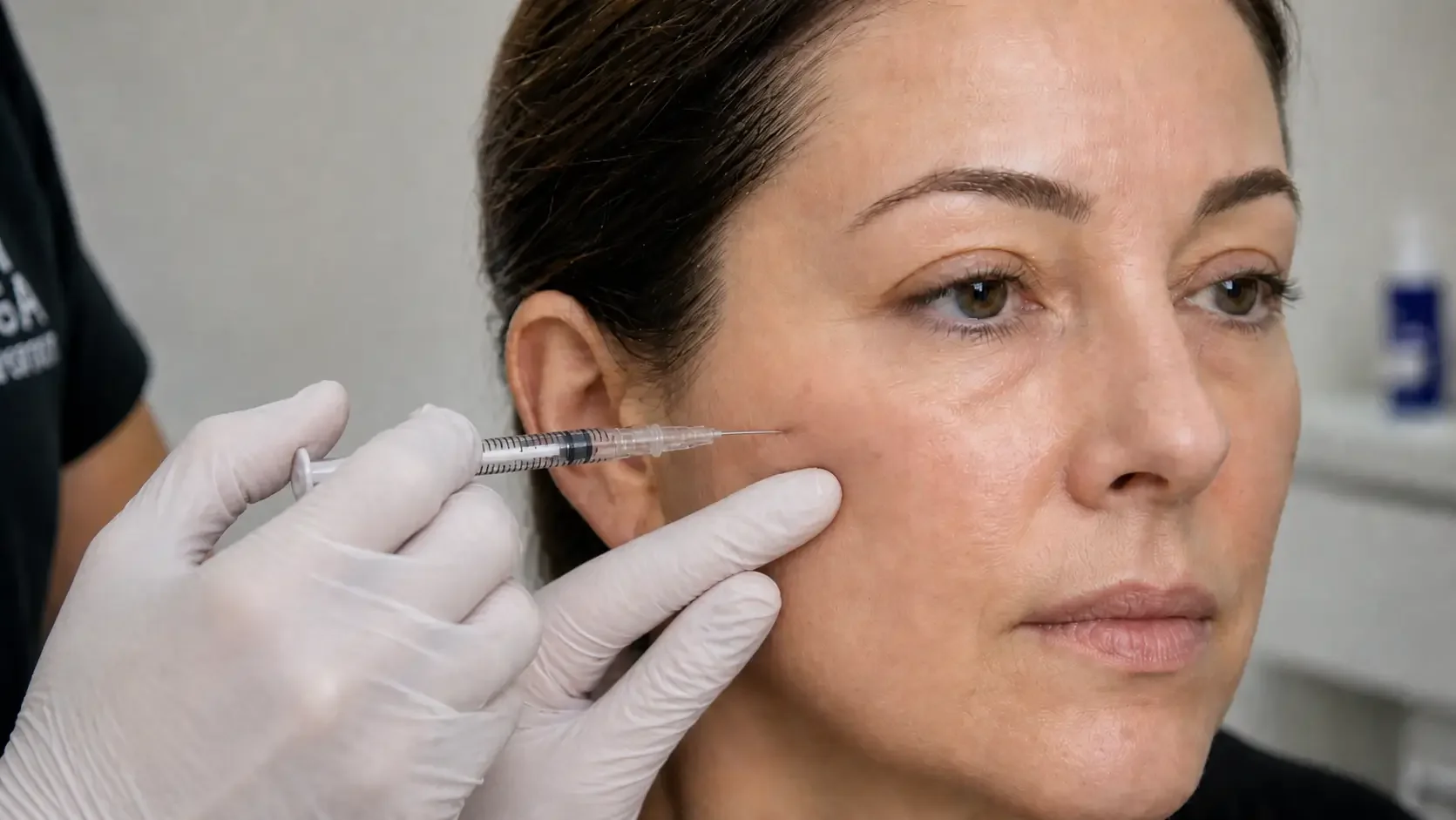
A physician-guided approach to cheek enhancement
Cheek filler should not be approached as simply “adding volume.” The cheeks are central to facial balance. They influence the midface, under-eye area, nasolabial folds, lower face, and overall facial proportions.
Dr. Sodeifievaluates the face as a whole before recommending cheek filler. This includes cheekbone structure, volume distribution, skin thickness, facial movement, asymmetry, smile pattern, and whether the concern is truly cheek volume, lower-face support, skin quality, or a combination.
The goal is subtle support and natural contour — not exaggerated cheekbones, puffiness, or a visibly filled look.
What cheek filler may help improve
Cheek filler may help selected patients with:
Mild to moderate midface volume loss
Flattening or softening of the cheek contour
Reduced cheek support contributing to facial tiredness
Facial imbalance between the cheeks, smile lines, chin, and jawline
Shadowing related to reduced midface support
A more lifted, supported, and refreshed appearance
Natural facial contour when conservatively placed
The best cheek filler results should look integrated with your own facial structure. The goal is not to change your face, but to restore or refine balance.
Why cheek volume changes over time
The cheeks can change with aging, genetics, weight fluctuation, collagen loss, bone support changes, and shifts in facial fat distribution. As midface support decreases, the face may look flatter, more tired, or less structured.
Cheek changes can also make nearby areas appear more prominent, including smile lines, lower-face heaviness, and mild shadowing. Because these areas are connected, cheek filler may sometimes be part of a broader facial-balancing plan rather than a standalone treatment.
How cheek filler works
Cheek filler is typically performed with hyaluronic acid dermal filler placed strategically to support the midface and refine facial contour.
Treatment planning depends on:
Cheekbone structure
Midface volume
Skin thickness
Facial symmetry
Smile pattern
Lower-face balance
Nasolabial fold depth
Prior filler history
Desired degree of contour
Whether cheek support, smile-line filler, chin filler, or jawline filler should also be considered
The goal is conservative placement that supports the face without adding unnecessary fullness.
Cheek filler vs. smile lines filler
Cheek filler and smile lines filler are related, but they are not the same.
Cheek filler focuses on midface support, contour, and structure.
Smile lines filler focuses more directly on the nasolabial folds, which run from the sides of the nose toward the corners of the mouth.
Some patients have both a cheek-volume or contour concern and nasolabial-fold depth. These concerns can be evaluated together, but cheek filler should not be presented as a reliable way to lift or erase the fold. A plan may include cheek treatment for its own indication, direct smile-line filler, a conservative combination, another approach, or no filler.
During a consultation, Dr. Sodeifi evaluates whether the concern is primarily cheek volume or contour, nasolabial-fold depth, skin quality, or overall facial balance.
Cheek filler vs. jawline or chin filler
Cheek filler improves midface support and contour. Chin and jawline filler focus more on lower-face structure.
These areas often influence one another. A face may look more balanced when the cheeks, chin, jawline, and smile lines are evaluated together rather than treated as isolated features.
This does not mean every area needs treatment. It means the treatment plan should be based on anatomy rather than a standard template.
Pricing
Cheek filler pricing depends on anatomy, treatment goals, product selection, and the number of syringes used.
For the most current pricing, please see the filler pricing page or contact the office at (925) 726-3876.
Who may be a good candidate
Cheek filler may be appropriate for patients who want subtle midface support or natural cheek enhancement without an overfilled look.
It may be a good fit for patients who:
Notice cheek flattening or midface volume loss
Feel the face looks tired or less supported
Want natural cheek contour rather than dramatic cheekbones
Have a separate smile-line or lower-face concern that should be evaluated as part of the overall treatment plan
Prefer physician-performed filler rather than a medspa-style approach
Understand that results depend on anatomy, skin quality, and facial structure
Candidacy is determined during consultation based on anatomy, goals, medical history, prior treatments, facial proportions, and safety considerations.
Who may not be a good candidate
Cheek filler may not be ideal for every patient. If the face already has significant fullness, heavy lower-face tissue, substantial skin laxity, or excess prior filler, additional cheek filler may not create the desired result.
Patients who want dramatic cheekbone projection, an overly sculpted appearance, or a major lifting effect may need a different plan. Filler can support and refine, but it cannot replace surgery or correct every cause of facial aging.
Dr. Sodeifi will recommend treatment only when it is likely to create a balanced, natural-looking improvement.
What cheek filler cannot do
Cheek filler cannot stop aging, permanently change bone structure, remove loose skin, replace a facelift, or guarantee a lifted appearance.
It can improve midface support and contour in selected patients, but overfilling the cheeks can make the face look puffy, heavy, or unnatural. A conservative approach is usually more elegant and medically appropriate.
Safety considerations
Dermal filler treatment requires careful knowledge of facial anatomy and vascular structures. The most concerning filler risk is unintentional injection into a blood vessel, which can reduce blood supply to tissue; rare reported complications include skin necrosis, vision problems including blindness, and stroke.
Common temporary effects may include swelling, bruising, tenderness, redness, and occasional lumpiness that often settles as swelling improves. Hyaluronic acid filler concerns can sometimes be improved with hyaluronidase depending on the situation and timing.
At NeuroBeauty Clinic, cheek filler is planned conservatively and performed by a physician with attention to anatomy, safety, facial balance, and natural results.
What to expect
Treatment is performed in-office after Dr. Sodeifi evaluates your facial structure, cheek support, skin quality, facial proportions, and treatment goals. Filler placement is customized based on whether the goal is subtle restoration, cheek contour, midface support, facial balancing, or a combination.
You may notice improvement immediately, although swelling and tenderness can affect the early appearance. Final settling depends on product selection, placement, anatomy, and your individual healing pattern. You will receive individualized aftercare instructions based on your treatment.
Related treatments
Patients considering cheek filler may also be interested in:
SkinPen Microneedling for skin texture and quality
PRP Microneedling for regenerative skin-quality support
Cosmetic Botox for muscle overactivity
The best plan depends on whether the concern is midface support, fold depth, lower-face balance, skin quality, or overall facial structure.
Frequently Asked Questions (FAQ) About Cheek Enhancement with Filler
-
Cheek filler is a dermal filler treatment used to support or refine the midface. It may help restore cheek volume, improve cheek contour, and support overall facial balance in selected patients.
-
In this context, yes. “Cheek enhancement” is the service name, while “cheek filler” is the more common patient search term.
-
It can if too much filler is used or if placement is not appropriate for the patient’s anatomy. At NeuroBeauty Clinic, the goal is subtle support and natural facial balance, not an overfilled appearance.
-
Cheek filler treats a cheek-volume or contour concern. Although the cheeks and nasolabial folds are evaluated together, cheek filler should not be considered a reliable way to lift or erase a nasolabial fold. A separate smile-line treatment may or may not be appropriate.
-
Neither is automatically better. They address different concerns. Dr. Sodeifi may recommend cheek treatment for its own indication, direct fold treatment, a conservative combination, another approach, or no filler based on the anatomy and goals.
-
It depends on anatomy, volume loss, facial proportions, and treatment goals. Dr. Sodeifi reviews the plan and pricing during consultation before treatment.
-
Cheek filler may improve support and create a more refreshed midface appearance in selected patients, but it cannot replace a facelift or correct significant skin laxity.
-
Common temporary effects include swelling, bruising, tenderness, redness, and occasional lumpiness. Rare but serious vascular complications can occur with dermal filler, which is why anatomy-guided physician treatment is important.
Schedule a consultation
NeuroBeauty is located in Walnut Creek, California, and serves patients from Lafayette, Danville, Alamo, San Ramon, Pleasant Hill, Concord, and the greater East Bay. If you are considering cheek filler or cheek enhancement in Walnut Creek, NeuroBeauty Clinic offers a physician-performed, anatomy-guided approach focused on subtle, natural-looking facial balance.
Call (925) 726-3876or request a consultation online, and the office will contact you directly to discuss availability and next steps.
Page details
Cheek Filler in Walnut Creek
Physician-performed cheek filler in Walnut Creek. Anatomy-guided cheek enhancement to restore midface support and natural facial balance.
Cheek Filler in Walnut Creek
Physician-performed cheek filler in Walnut Creek. Anatomy-guided cheek enhancement to restore midface support and natural facial balance.