

Smile Lines Filler in Walnut Creek
Smile lines, also called nasolabial folds, are the lines or folds that run from the sides of the nose toward the corners of the mouth. They are a normal part of facial anatomy and expression, but they can become deeper over time as skin elasticity, facial volume, and facial support change.
At NeuroBeauty Clinic in Walnut Creek, smile lines filler is performed exclusively by Dr. Negar Sodeifi, MD, a neurologist. Treatment is guided by facial anatomy, facial movement, fold depth, cheek support, skin quality, and the goal of softening the area without creating an overfilled or unnatural appearance.
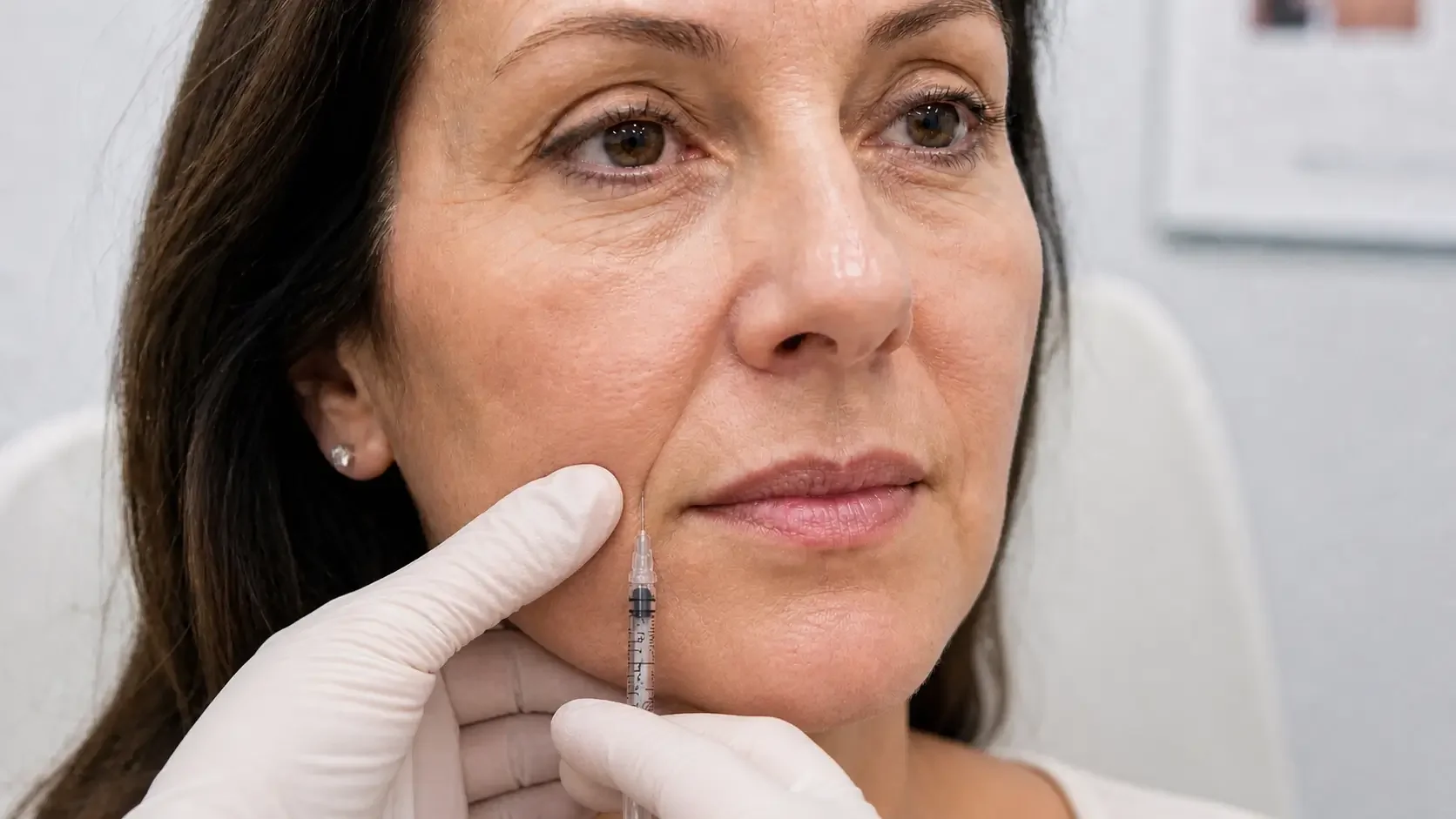
A physician-guided approach to nasolabial folds
Smile lines are not always just a “line problem.” Nasolabial folds can become more noticeable because of facial structure, skin thinning, collagen loss, repeated expression, natural aging, and changes in nearby tissues.
Some patients have both fold depth and a separate cheek-volume or contour concern. Dr. Sodeifi evaluates these areas together, but does not assume that adding cheek filler will lift or erase the fold. Depending on the anatomy and goals, she may recommend direct fold treatment, cheek treatment for its own indication, a conservative combination, another approach, or no filler. The goal is subtle facial balance, not simply filling every visible line.
What smile lines filler may help improve
Smile lines filler may help selected patients with:
Mild to moderate nasolabial folds
Deeper smile lines from volume loss or tissue support changes
Creasing from the side of the nose toward the mouth corners
Facial shadowing around the midface and lower face
A tired or aged appearance related to deeper folds
The best results usually look soft and natural. The goal is not to erase normal expression or make the face look puffy.
Why smile lines develop
Nasolabial folds develop from a combination of facial anatomy, expression, skin quality, and structural support. The fold itself is normal, but it can deepen when the cheek and midface lose support or when skin becomes thinner and less elastic.
Common contributors include:
Natural facial anatomy
Repeated smiling and facial expression
Midface volume loss
Cheek descent or reduced support
Skin thinning and collagen loss
Sun exposure
Genetics
Weight changes
Because the cause varies from person to person, the best treatment plan should be individualized.
How filler works for smile lines
Dermal filler can be used to soften selected nasolabial folds by adding gentle support beneath the crease. A separate cheek or lower-face concern may also be treated when appropriate, but each area has its own indication and treatment goal.
Treatment planning depends on:
Fold depth
Cheek support
Midface volume
Skin thickness
Facial movement
Smile pattern
Lower-face balance
Prior filler history
Whether direct fold treatment, treatment of a separate cheek concern, a conservative combination, another approach, or no filler is most appropriate
The goal is conservative correction that supports the face while preserving natural movement.
Direct nasolabial fold filler vs. cheek support
Not every smile line should be treated the same way.
Direct nasolabial fold filler may be appropriate when the fold itself can be softened conservatively. Cheek filler may be appropriate when there is a separate midface volume or contour concern, but it should not be presented as a reliable way to lift or erase the nasolabial fold.
Some patients have both concerns. During a consultation, Dr. Sodeifi may recommend direct fold treatment, cheek treatment for its own indication, a conservative combination, another approach, or no filler based on the anatomy and goals.
Pricing
Smile lines filler pricing depends on anatomy, fold depth, product selection, treatment plan, and the number of syringes used.
For the most current pricing, please see the filler pricing page or contact the office at (925) 726-3876.
Who may be a good candidate
Smile lines filler may be appropriate for patients who want subtle softening of nasolabial folds without changing their natural expression.
It may be a good fit for patients who:
Notice deeper folds from the nose to the mouth corners
Feel smile lines make the face look tired or aged
Want a natural-looking improvement rather than an overfilled look
Prefer physician-performedfiller rather than a medspa-style approach
Understand that results depend on anatomy, skin quality, and facial structure
Candidacy is determined during consultation based on anatomy, goals, medical history, prior treatments, facial movement, and safety considerations.
Who may not be a good candidate
Smile lines filler may not be ideal for every patient. If the main concern is significant skin laxity, heavy tissue descent, severe volume loss, or very deep folds, filler alone may not create the desired result.
Patients who already have excess filler, significant facial heaviness, unrealistic expectations, or anatomy that would be better addressed with another procedure or no filler may need a different plan.
Dr. Sodeifi will recommend treatment only when it is likely to create a balanced, natural-looking improvement.
What smile lines filler cannot do
Filler cannot stop facial aging, remove loose skin, replace surgery, eliminate all folds, or erase every line. Nasolabial folds are part of normal facial anatomy, and the goal should not be to remove them completely.
Overfilling the smile lines can make the midface or lower face look heavy. A conservative approach is usually more elegant and natural.
Safety considerations
Dermal filler treatment requires careful knowledge of facial anatomy and vascular structures. The most important safety concern with fillers is unintentional injection into a blood vessel, which can reduce blood supply to tissue; rare reported complications include skin necrosis, vision problems including blindness, and stroke.
Seek immediate medical attention for unusual pain, white, gray, or blue skin near the treated area, vision changes, or signs of a stroke during or shortly after filler treatment.
At NeuroBeauty Clinic, filler treatment is planned conservatively and performed by a physician with careful attention to anatomy. Common temporary effects can include swelling, bruising, tenderness, redness, and occasional lumpiness that may settle as swelling improves.
Hyaluronic acid filler may sometimes be reduced with hyaluronidase, depending on the filler and clinical situation. Removal outcomes vary, and the process can have risks. Persistent or delayed lumps, redness, swelling, or other unusual or worsening concerns should be evaluated clinically.
What to expect
Treatment is performed in-office after Dr. Sodeifi evaluates your facial structure, smile lines, cheek volume, skin quality, and goals. The plan may involve direct fold treatment, treatment of a separate cheek concern, a conservative combination, another approach, or no filler.
You may notice improvement immediately, although swelling and tenderness can temporarily affect the early appearance. Final settling depends on product, placement, anatomy, and swelling pattern. You will receive individualized aftercare instructions based on your treatment.
Related treatments
Patients considering smile lines filler may also be interested in:
SkinPen Microneedling for fine lines and skin texture
PRP Microneedling for regenerative skin-quality support
Cosmetic Botox for overactive muscles
The best plan depends on whether the concern is fold depth, midface support, facial volume, skin quality, or overall facial balance.
Frequently Asked Questions (FAQ) About Filler For Smile Lines
-
Smile lines are the folds that run from the sides of the nose toward the corners of the mouth. They are also called nasolabial folds.
-
Yes. Filler can soften selected smile lines or nasolabial folds. The best approach depends on fold depth, facial structure, skin quality, prior treatment, goals, and whether filler is appropriate at all.
-
No. Smile-line filler focuses on the nasolabial fold area. Cheek filler addresses a separate midface volume or contour concern. Dr. Sodeifi evaluates both areas when planning treatment, but cheek filler should not be considered a reliable way to lift or erase the fold.
-
Results are temporary. How long they remain visible and how quickly the area settles vary with the product, amount, placement, tissue movement, anatomy, and swelling. Early improvement may be visible immediately, but the first look is not the final result. Dr. Sodeifi can discuss the labeling and expected follow-up for the product selected for you.
-
There is no standard syringe count. The amount and treatment area depend on fold depth, facial structure, prior filler, tissue support, goals, and whether filler is appropriate at all. The plan and current pricing are reviewed before treatment.
-
“Smile lines” can mean different areas. Nasolabial folds beside the nose and mouth are different from crow's-feet at the outer eyes. Filler addresses selected volume or structural concerns, while Botox targets selected muscle activity. Neither is automatically better, and some concerns need another approach or no procedure.
-
People sometimes use all three phrases for nasolabial folds, which run from the sides of the nose toward the mouth. “Laugh lines” can also mean crow's-feet at the outer eyes, so the location matters.
-
It can if too much filler is placed or if the wrong area is treated. The goal at NeuroBeauty Clinic is subtle support and softening, not overfilling.
-
Sometimes, but not always. Direct filler may soften a selected fold. A patient may also have a separate cheek concern, but treating the cheek does not reliably improve the fold. The plan may include direct treatment, treatment of an independent cheek concern, a conservative combination, another approach, or no filler.
-
Common temporary effects include swelling, bruising, tenderness, redness, and occasional lumpiness. Rare but serious vascular complications can occur with dermal filler. Seek immediate medical attention for unusual pain, white, gray, or blue skin near the treated area, vision changes, or signs of a stroke during or shortly after treatment.
-
Migration has been reported as a filler concern. Hyaluronic acid filler may sometimes be reduced with hyaluronidase, depending on the filler, concern, timing, and clinical situation. Removal outcomes vary, and the process can have risks.
-
Aftercare depends on the product, placement, and your medical situation. Follow the instructions you receive rather than a fixed internet rule. Contact the clinic if you are unsure or if symptoms are unusual or worsening.
-
Filler does not stop normal aging. As a temporary filler's visible effect changes, the underlying anatomy and ongoing aging remain. Stopping treatment does not necessarily make someone look older, but an individual result cannot be predicted from a webpage.
Schedule a consultation
NeuroBeauty is located in Walnut Creek, California, and serves patients from Lafayette, Danville, Alamo, San Ramon, Pleasant Hill, Concord, and the greater East Bay. If you are considering filler for smile lines or nasolabial folds in Walnut Creek, NeuroBeauty Clinic offers a physician-performed, anatomy-guided approach focused on subtle, natural-looking results.
Call (925) 726-3876 or request a consultation online, and our office will contact you directly to discuss availability and next steps.
Page details
Smile Lines Filler in Walnut Creek
Physician-performed filler for smile lines and nasolabial folds in Walnut Creek. Anatomy-guided treatment to soften folds while preserving natural expression.
Nasolabial Fold and Smile Line Filler in Walnut Creek
Physician-performed filler for smile lines and nasolabial folds in Walnut Creek. Anatomy-guided treatment to soften folds while preserving natural expression.