

Forehead Lines Botox in Walnut Creek
Forehead lines are the horizontal lines that appear across the upper forehead when the eyebrows lift. For some patients, these lines are mild and only visible with expression. For others, they gradually become more noticeable at rest and can contribute to a tired, tense, or aged appearance.
At NeuroBeauty Clinic in Walnut Creek, forehead Botox is performed exclusively by Dr. Negar Sodeifi, MD, a neurologist. Treatment is guided by facial anatomy, muscle movement, brow position, and the goal of achieving a smoother, more rested appearance without looking frozen or overtreated.
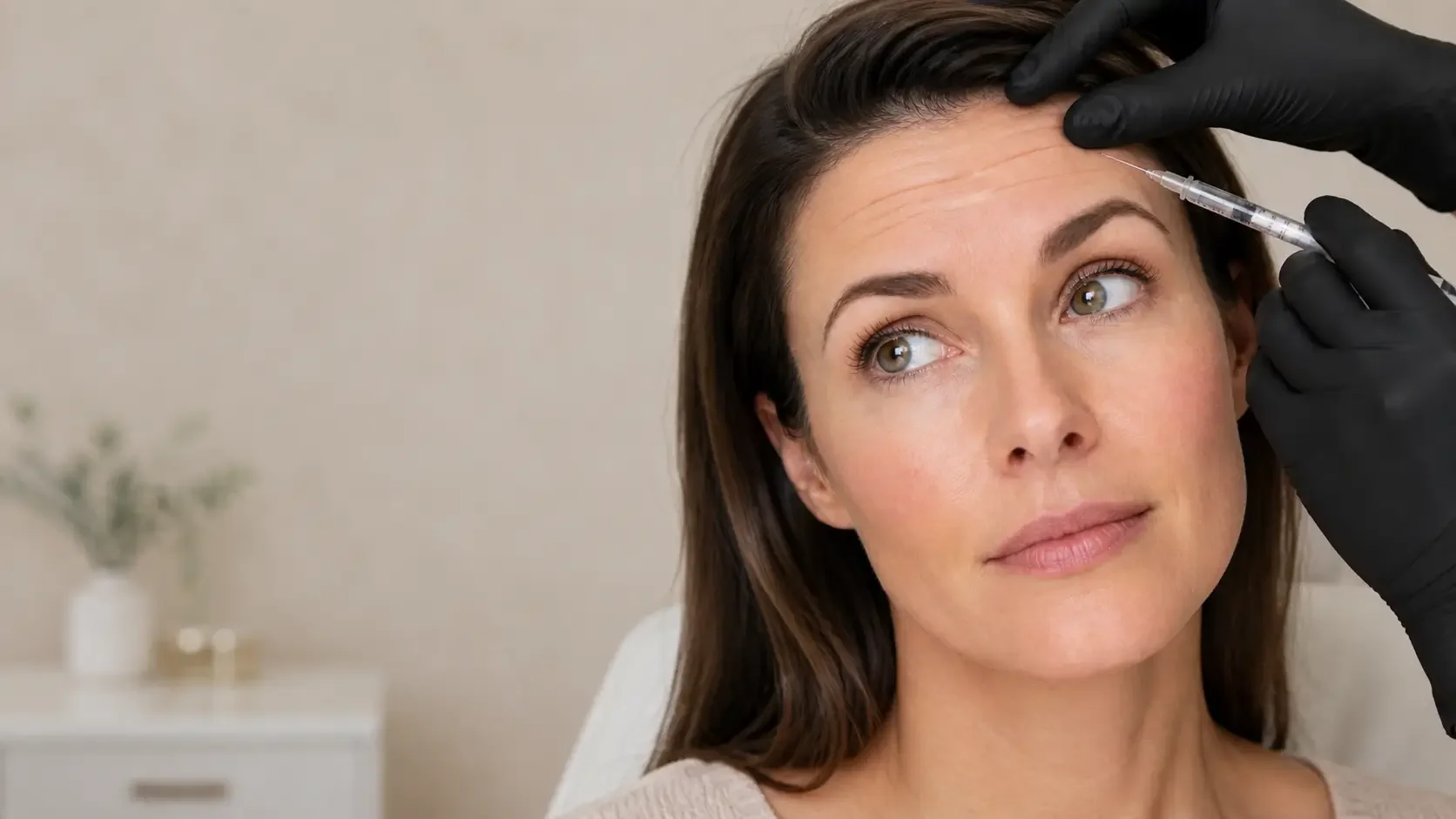
A physician-guided approach to forehead lines
The forehead is one of the most important areas to treat conservatively. The frontalis muscle, which creates horizontal forehead lines, also helps lift and support the eyebrows. If this area is treated too aggressively, the result can be brow heaviness, a flattened expression, or an unnatural appearance.
For this reason, forehead Botox requires more than simply relaxing wrinkles. It requires careful assessment of how the forehead, brows, eyelids, and frown muscles work together. Dr. Sodeifi customizes treatment based on your anatomy and facial movement pattern, with a focus on balance, subtlety, and natural expression.
What forehead Botox can help improve
Forehead Botox may help:
Soften horizontal forehead lines
Reduce excessive forehead creasing with expression
Create a smoother, more rested appearance
Preserve natural brow movement when conservatively dosed
Improve upper-face balance when combined with frown line treatment
The goal is refinement, not immobilization. Most patients want to look refreshed and natural — not obviously treated.
Why forehead lines develop
Forehead lines are caused by repeated contraction of the frontalis muscle. This muscle lifts the eyebrows and creates horizontal creases across the forehead. Over time, repeated movement, decreased collagen support, and changes in skin elasticity can cause these lines to become more visible, even when the face is relaxed.
In some patients, forehead lines also develop because the forehead is compensating for brow or eyelid heaviness. In these cases, over-relaxing the forehead can make the brows feel heavier. This is one reason anatomy-guided assessment is especially important before treatment.
How Botox works for forehead lines
Botox temporarily reduces targeted muscle activity in the forehead. When placed precisely and dosed conservatively, it can soften excessive forehead movement while preserving enough activity for natural facial expression.
Treatment planning depends on several factors, including:
Forehead muscle strength
Brow position
Eyelid anatomy
Existing asymmetry
Depth of the lines
Whether frown lines are also contributing to upper-face tension
Because the forehead and frown muscles work together, some patients achieve a more balanced result when forehead lines and frown lines are treated together.
Pricing
Forehead Botox pricing depends on anatomy, muscle strength, dosing, and whether treatment is combined with other upper-face areas.
For the most current pricing, please see the Botox pricing page or contact the office at (925) 726-3876.
Who may be a good candidate
Forehead Botox may be appropriate for patients who are bothered by horizontal forehead lines and want a subtle, natural-looking improvement. It is often a good fit for patients who prefer conservative treatment, value physician-performed care, and want to avoid an overdone or frozen appearance.
It may be less appropriate as a stand-alone treatment if the forehead is being used to compensate for brow or eyelid heaviness. In those cases, Dr. Sodeifi may recommend a more balanced upper-face plan or a more conservative dose.
What forehead Botox cannot do
Forehead Botox can soften movement-related lines, but it does not replace every skin or structural treatment. It may not fully erase deep static lines that are present at rest, especially when those lines are related to long-standing collagen loss, skin thinning, or sun damage.
For deeper etched lines or broader skin-quality concerns, Botox may be combined with other treatments such as SkinPen microneedling, PRP microneedling, dermal fillers, or other individualized approaches depending on your goals and candidacy.
What to expect
Treatment is typically brief and performed in-office. Dr. Sodeifi evaluates your forehead movement, brow position, and overall upper-face balance before placing Botox in a customized pattern.
Results usually develop gradually over several days, with the full effect typically seen around two weeks. The goal is a smoother forehead that still allows appropriate expression and facial movement. Duration varies by patient, dose, metabolism, and muscle strength.
Related treatments
Patients considering forehead Botox may also be interested in:
Three-Area Upper Face Botox
SkinPen Microneedling for skin texture and fine lines
These treatments address different causes of facial aging. Botox is best for movement-related lines, while microneedling is more focused on skin quality and collagen stimulation.
Frequently Asked Questions (FAQ) About Forehead Botox
-
Not when the treatment is planned conservatively. The goal is to soften excessive forehead movement while preserving natural expression. Dr. Sodeifi evaluates brow position, forehead strength, and facial balance before treatment.
-
It can if the forehead is overtreated or if the frontalis muscle is compensating for brow or eyelid heaviness. This is why dosing and injection placement are especially important in the forehead.
-
Duration varies, but many patients notice results for several months. Muscle strength, dose, metabolism, and treatment pattern all affect longevity.
-
Often, yes. The forehead and frown muscles work together to influence brow position and upper-face balance. Some patients get a better, more natural result when both areas are considered together.
-
It may help soften the movement component, but deep static lines may not fully disappear with Botox alone. If skin quality or etched lines are a major concern, Dr. Sodeifi may discuss additional options such as microneedling or dermal fillers.
Schedule Botox in Walnut Creek
NeuroBeauty is located in Walnut Creek, California, and serves patients from Lafayette, Danville, Alamo, San Ramon, Pleasant Hill, Concord, and the greater East Bay. If you are considering Botox and want a physician-performed, anatomy-guided approach, NeuroBeauty Clinic offers personalized treatment planning in a calm, boutique setting.
Call (925) 726-3876 to schedule a consultation.
Or submit a consultation request and our office will contact you directly.
Page details
Forehead Lines Botox in Walnut Creek
Physician-performed Botox for forehead lines in Walnut Creek. Anatomy-guided treatment to soften horizontal forehead lines while preserving natural brow movement.
Forehead Lines Botox in Walnut Creek
Physician-performed Botox for forehead lines in Walnut Creek. Anatomy-guided treatment to soften horizontal forehead lines while preserving natural brow movement.