
Jaw Clenching, Tooth Wear, and TMJ Symptoms: Should You See a Dentist or a Physician?

Jaw clenching can affect more than one part of the jaw system. It may leave signs on the teeth, strain dental restorations, involve the temporomandibular joint, or overwork the muscles used for chewing. The right place to start depends on which problem needs evaluation.
A dentist is usually the first clinician to see when there is tooth wear, sensitivity, a cracked or chipped tooth, damaged dental work, bite concerns, or a need for an oral appliance. Physician evaluation may add value when symptoms appear strongly muscle-related, a facial neuromuscular concern is possible, dental causes have already been considered, or a dentist recommends medical assessment. Some patients need coordinated dental and medical care rather than a single-provider answer.
Jaw Clenching, Bruxism, TMJ, and TMD Are Related Terms, Not Identical Problems
Bruxism means grinding, clenching, or gnashing the teeth. It can occur while awake or during sleep. According to the National Institute of Dental and Craniofacial Research, more significant bruxism can contribute to flattened, chipped, cracked, or sensitive teeth, damaged restorations, jaw-muscle soreness, facial pain, and headache.
TMJ refers to the temporomandibular joint itself. TMD refers to a group of disorders that can affect the jaw joint, the chewing muscles, or both. The NIDCR overview of TMD explains why pain near the jaw does not automatically identify one cause or one treatment.
This distinction matters. Tooth damage, joint problems, muscle overactivity, sleep-related concerns, headache disorders, and other medical conditions can overlap, but they are not interchangeable.
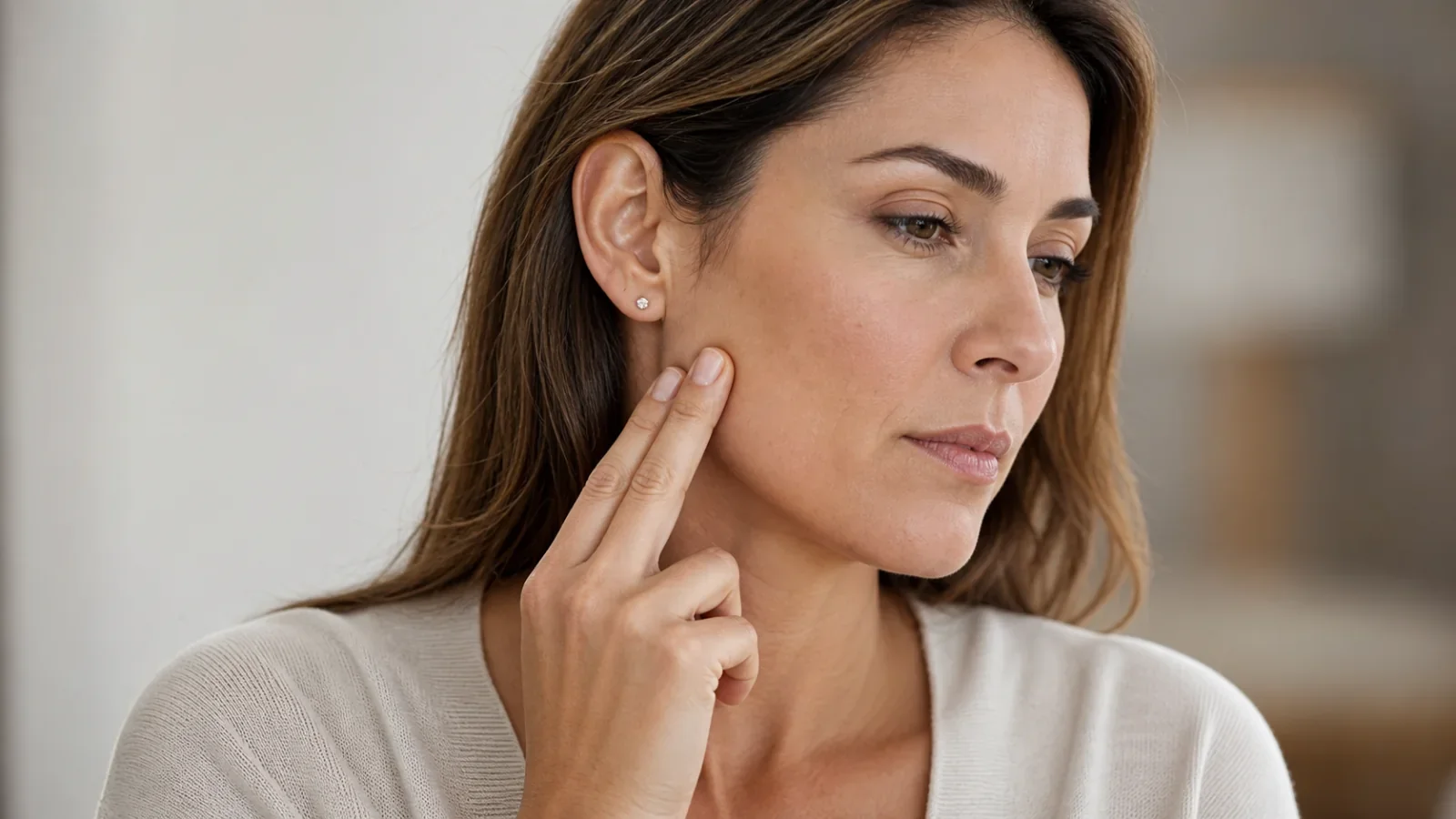
When a Dentist Should Be Your First Stop
Begin with a dentist when your main concern involves:
Flattened, worn, chipped, cracked, loose, or sensitive teeth.
A damaged crown, filling, veneer, implant restoration, or other dental work.
Localized tooth pain, gum swelling, drainage, or concern for infection.
A new change in the way your teeth meet.
Questions about a night guard, splint, or another oral appliance.
Bite, gum, cavity, or other oral-health concerns.
Repairing tooth damage caused or worsened by grinding.
A dental examination can look for wear patterns, damaged enamel, injured teeth or restorations, tenderness, and other oral causes of pain. A dentist can also determine whether tooth protection, restorative treatment, imaging, an oral appliance, or referral to an appropriate dental specialist is needed.
Tooth repair and appearance-related dental care are separate from treating jaw-muscle activity. After the health and source of the dental problem have been assessed, patients who want to discuss whitening, bonding, veneers, crowns, or other smile-focused options can review cosmetic dentistry in Walnut Creek with Milcovich Dental Arts.
When Physician Evaluation May Add Value
Physician evaluation may be reasonable when:
Jaw soreness or fatigue appears centered in the chewing muscles.
The masseter muscles feel persistently tight, tender, or overworked.
Symptoms continue despite appropriate dental evaluation or conservative care.
A dentist suspects that jaw-muscle overactivity has a meaningful role.
Facial pulling, involuntary movement, spasm, weakness, numbness, or another neurologic feature is present.
Headache, sleep, medication, movement, or another medical factor may need separate evaluation.
The diagnosis remains unclear or more than one condition may be contributing.
The appropriate physician depends on the symptom pattern. Primary care, neurology, sleep medicine, pain medicine, physical therapy, otolaryngology, oral and maxillofacial care, or an orofacial pain clinic may be involved in selected cases.
At NeuroBeauty, Dr. Negar Sodeifi provides a focused pre-injection safety and candidacy review for selected jaw-muscle and facial neuromuscular concerns. NeuroBeauty does not replace comprehensive dental evaluation, structural jaw-joint assessment, tooth repair, oral-appliance care, or ongoing TMD management. The dentist referral resources explain this scope for patients and dental teams.
Why Some Patients Need Both Dental and Medical Care
Dental and medical roles can complement each other.
A dentist may identify wear, cracks, restoration damage, or the need to protect the teeth. A physician may evaluate whether a muscle or neurologic contributor warrants medical attention. When both are relevant, coordinated care can keep one treatment from being mistaken for a complete solution.
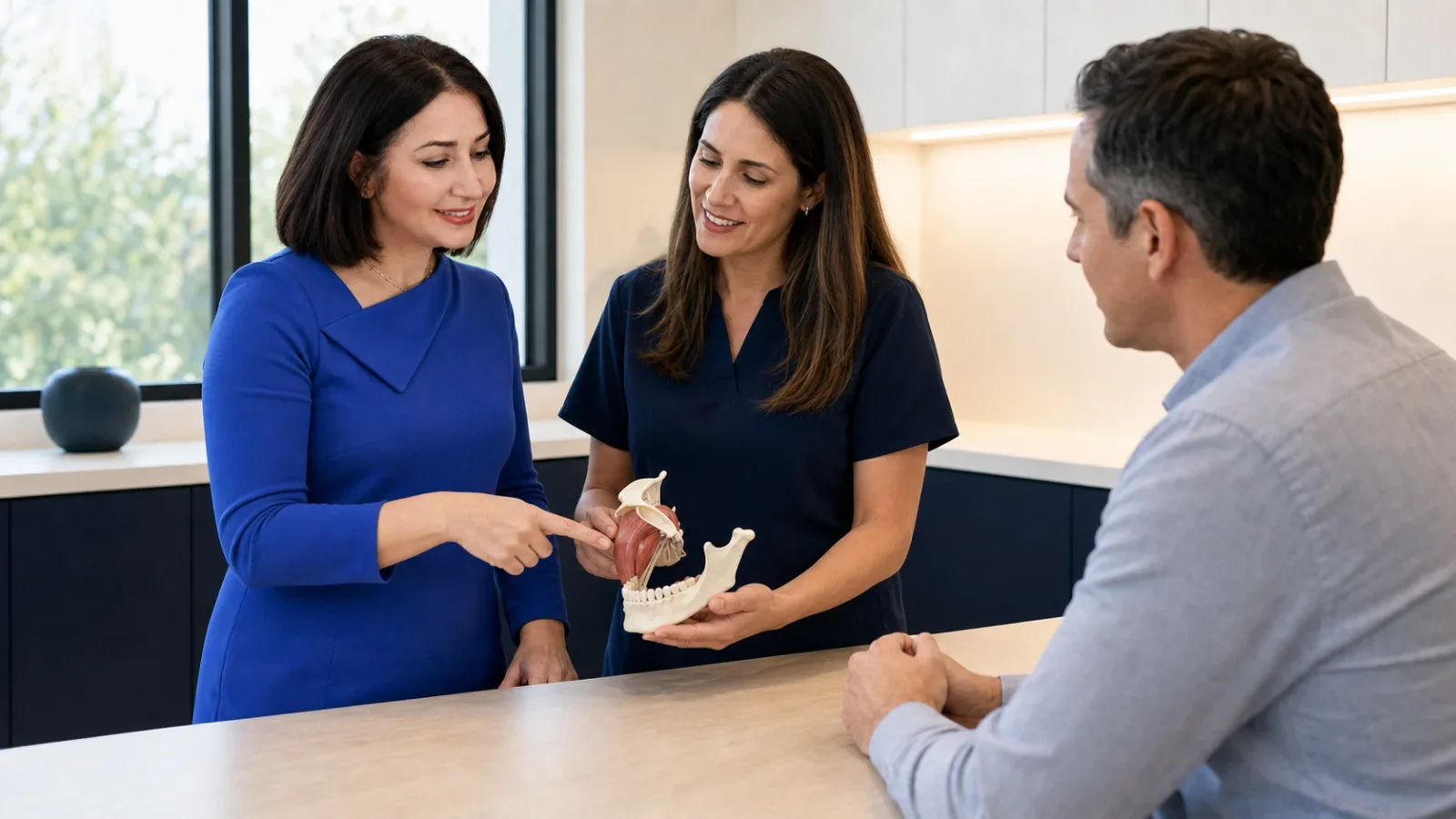
Examples include:
A night guard may protect teeth from grinding forces, while a separate plan addresses persistent muscle symptoms.
Restorative treatment may repair damaged teeth, while the cause of ongoing clenching still needs attention.
Jaw-muscle treatment may reduce targeted muscle activity in a selected patient, but it cannot restore enamel or repair a crown.
Joint locking or structural symptoms may need dental, oral and maxillofacial, or other specialist evaluation even when muscle tenderness is also present.
What Botox Can and Cannot Address
Botulinum toxin temporarily reduces activity in the muscles where it is injected. For selected patients, a physician may consider it when overactivity of the masseter or related chewing muscles appears to contribute to symptoms.
The evidence for botulinum toxin injections in TMD is not conclusive, and use for TMD-related jaw-muscle symptoms is off-label. A consultation should address the reason for considering treatment, reasonable alternatives, expected variability, and risks such as bruising, tenderness, temporary chewing weakness, asymmetry, unwanted smile change, or incomplete response.
Botox does not:
Repair worn, chipped, or cracked teeth.
Protect teeth from grinding forces.
Replace a night guard or other dental care.
Correct a bite.
Repair the temporomandibular joint or reposition a displaced disc.
Treat every cause of jaw pain, facial pain, headache, or clenching.
Guarantee that grinding or clenching behavior will stop.
For treatment-specific information, review TMJ Botox in Walnut Creek and the existing guide to Botox for jaw clenching. The broader Therapeutic Botox page explains NeuroBeauty's other physician-performed services.
Symptoms That Need Prompt Evaluation
Do not wait for a routine cosmetic or Botox consultation when symptoms include:
Sudden or severe tooth pain, facial swelling, fever, drainage, or concern for infection.
Recent facial or jaw trauma or a possible fracture.
A jaw that is locked open or closed, or a marked new limitation in opening.
A sudden bite change.
New facial weakness, numbness, difficulty speaking, trouble swallowing, or another progressive neurologic symptom.
Chest pressure, shortness of breath, stroke-like symptoms, or another possible medical emergency.
Seek urgent dental, medical, oral and maxillofacial, or emergency care based on the symptom. Call 911 for a possible medical emergency.
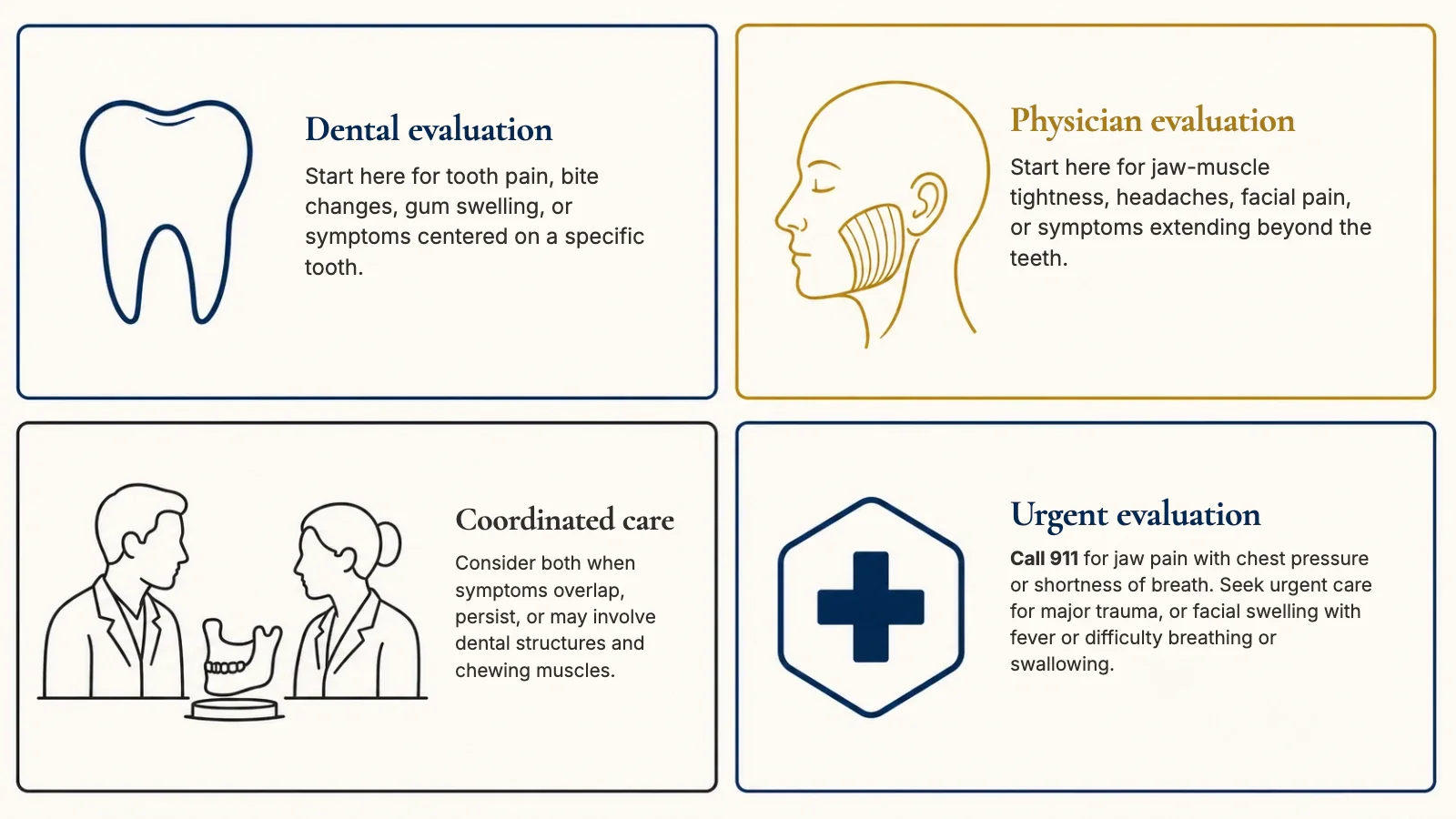
A Practical Starting Point
If you are unsure where to begin, use the most specific problem as your guide:
Teeth, restorations, gums, bite, or an oral appliance: start with a dentist.
Jaw locking, trauma, swelling, infection, or a sudden bite change: seek prompt dental, oral-surgery, medical, or urgent evaluation.
Persistent chewing-muscle symptoms after dental causes have been considered: ask whether physician or orofacial pain evaluation is appropriate.
Possible neuromuscular features: seek medical evaluation.
More than one pattern: coordinated care may be the most useful approach.
-
A dentist can review symptoms, examine the teeth and restorations for wear or damage, and check the jaw and face for tenderness. Sleep-related bruxism can be more difficult to confirm, and selected patients may need evaluation for a sleep disorder or another contributing condition.
-
Often, yes. People may clench or grind without realizing it, especially during sleep. Regular dental care allows a dentist to look for early wear, cracks, restoration damage, sensitivity, or other signs before tooth pain becomes the main concern.
-
An oral appliance may protect the teeth and may reduce some grinding or clenching activity, but it does not guarantee that the behavior will stop. The appliance should be selected and monitored by an appropriate dental or medical professional, especially if it causes pain or changes the bite.
-
No. Botox does not shield the teeth from contact, restore damaged enamel, repair a cracked tooth, or replace treatment for dental disease. Some patients may continue dental care or use an oral appliance even if physician-directed jaw-muscle treatment is considered.
-
No. The anatomical area can overlap, but the goals differ. Therapeutic evaluation focuses on selected muscle-related symptoms and functional concerns. Cosmetic masseter slimming focuses on lower-face contour. Each requires separate candidacy, risk, and treatment-goal discussion.
-
No. NeuroBeauty provides a focused physician review for selected jaw-muscle and facial neuromuscular concerns and may consider physician-performed Botox injections when appropriate. Dental disease, tooth protection, bite-related care, oral appliances, structural joint assessment, and comprehensive TMD management remain with the appropriate dental, medical, or specialist setting.
-
Yes, when coordination is clinically useful and you authorize the exchange of relevant information through an appropriate secure process. Do not send private health information through an ordinary website form or unsecured email.
Discuss Whether Physician Evaluation Fits Your Situation
If a dentist has identified persistent clenching, grinding, jaw-muscle tenderness, or another finding that may have a muscular or facial neuromuscular component, you can learn more about Dr. Sodeifi's neurologist-led approach.
Schedule a consultation online to discuss whether NeuroBeauty's limited scope is appropriate. A consultation does not assume that Botox will be recommended.
This article provides general education and is not individualized dental or medical advice.
Page details
Jaw Clenching, Tooth Wear, and TMJ Symptoms: Should You See a Dentist or a Physician?
Jaw clenching can involve teeth, jaw joints, or chewing muscles. Learn when to see a dentist, physician, or both in Walnut Creek.
Jaw Clenching, Tooth Wear, and TMJ Symptoms: Should You See a Dentist or a Physician?
Jaw clenching can involve teeth, jaw joints, or chewing muscles. Learn when to see a dentist, physician, or both in Walnut Creek.
Dr. Negar Sodeifi, MD, Physician and neurologist