TMJ Botox for Jaw Pain and Bruxism in Walnut Creek
TMJ pain, jaw clenching, and bruxism can cause discomfort in the jaw, face, temples, teeth, head, neck, and shoulders. In some patients, overactivity of the masseter and related jaw muscles contributes to muscle tension, jaw soreness, tooth grinding, facial fatigue, and headaches.
At NeuroBeauty Clinic in Walnut Creek, Botox for TMJ-related jaw muscle pain and bruxism is performed exclusively by Dr. Negar Sodeifi, MD, a neurologist. Treatment is guided by jaw muscle anatomy, facial movement, clenching pattern, pain location, dental history, neurologic history, and whether Botox is appropriate for your specific symptoms. Read more about Botox for TMJ pain in our blog post.
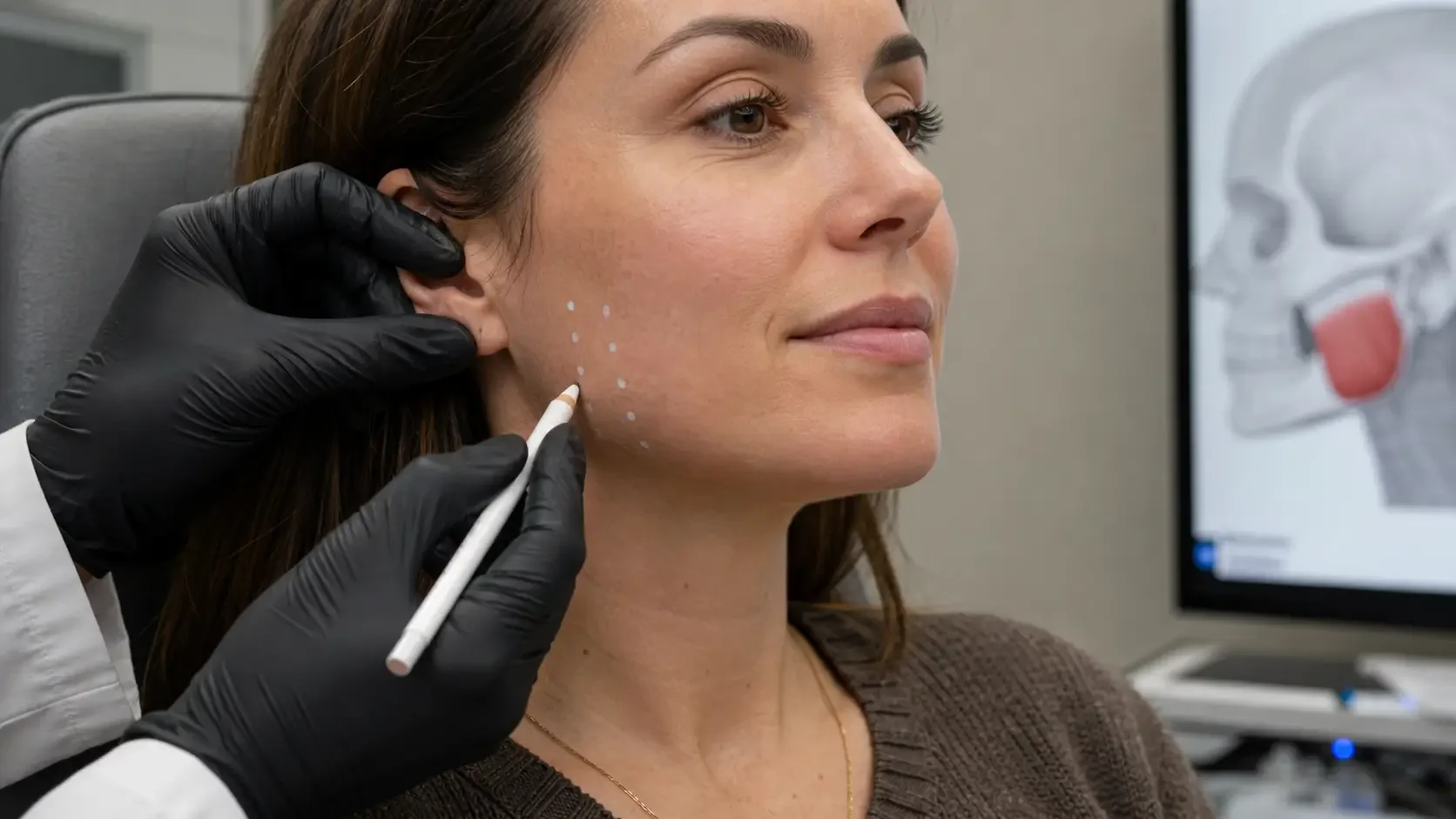
A neurologist-guided approach to jaw muscle pain
“TMJ” is often used casually to describe jaw pain, but the medical picture is more complex. The TMJ is the jaw joint itself, while temporomandibular disorders, or TMDs, include more than 30 conditions that can affect the joint, chewing muscles, face, head, and neck. NIDCR describes TMD symptoms as including jaw muscle or joint pain, pain spreading to the face or neck, stiffness, limited movement, locking, painful clicking, and changes in bite sensation.
Botox is not a treatment for every type of TMJ problem. It is most relevant when muscle overactivity, clenching, grinding, or myofascial jaw tension is a major contributor.
Dr. Sodeifi evaluates the pattern before recommending treatment. The goal is to reduce excessive jaw muscle activity when appropriate, not to treat every jaw complaint the same way. Read more about Botox for TMJ pain in our blog post.
Why NeuroBeauty for TMJ Botox?
TMJ-related jaw tension, bruxism, facial pain, and headaches can overlap in complicated ways. At NeuroBeauty, TMJ Botox is approached as a physician-led evaluation, not a one-size-fits-all cosmetic treatment.
Dr. Negar Sodeifi, MD is a neurologist who evaluates jaw muscle tension, clenching patterns, headache history, facial anatomy, and treatment goals before recommending whether Botox is appropriate. The goal is conservative, anatomy-guided treatment planning for selected candidates, with clear discussion of limitations and alternatives.
For jaw discomfort or clenching: This page focuses on TMJ-related symptoms, bruxism, and masseter muscle tension.
For facial slimming: See the Masseter Slimming Botox page.
For migraine or headache patterns: See the chronic migraine Botox and therapeutic Botox pages
If Botox is not the right fit, Dr. Sodeifi will discuss that directly. Many TMJ-related concerns also require dental evaluation, bite protection, physical therapy, habit modification, or other conservative care.
What TMJ Botox may help with
Botox may be considered for selected patients with:
Jaw clenching
Bruxism or teeth grinding
Masseter muscle overactivity
Jaw muscle soreness or fatigue
Temple or facial tension related to clenching
Headaches associated with jaw muscle tension
Muscle-related TMD symptoms
Enlarged or overactive masseter muscles contributing to discomfort
Results vary. Botox may help some patients by reducing muscle contraction intensity, but it does not correct every cause of TMJ pain, bite problems, joint disease, or dental damage.
TMJ pain vs. bruxism vs. masseter tension
These terms overlap, but they are not identical.
TMJ pain usually refers to pain around the jaw joint or jaw area.
TMD refers to a broader group of temporomandibular disorders involving the jaw joint, chewing muscles, and related tissues.
Bruxism refers to teeth grinding or clenching, often during sleep or stress.
Masseter tension refers to overactivity or tightness of the main jaw-closing muscle along the lower cheek and jawline.
Botox is most often considered when muscle overactivity is an important part of the problem. If the main issue is joint degeneration, bite mechanics, disc displacement, dental pathology, or another medical condition, a different approach may be needed.
How Botox works for jaw clenching and bruxism
Botox temporarily reduces muscle contraction by blocking nerve signaling at the neuromuscular junction. When used in the masseter muscle, and sometimes nearby muscles depending on the plan, Botox may reduce the force of clenching and grinding.
This can help selected patients experience less jaw muscle tension or soreness over time. It does not numb the jaw, repair the TMJ joint, change the bite, or replace dental protection when tooth wear is present.
The treatment pattern is individualized based on:
Masseter size and strength
Clenching pattern
Jaw pain location
Bruxism history
Temporalis involvement
Dental wear or nightguard use
Facial symmetry
Chewing function
Cosmetic concerns, if any
Prior Botox history
Safety considerations
Evidence and limitations
The evidence for Botox in TMD and bruxism is mixed. A 2024 umbrella review found moderate evidence that botulinum toxin-A may reduce pain intensity in myogenous TMD compared with placebo, but it was not superior to standard treatments for all outcomes and was associated with concern for adverse effects on muscle and bony tissue; the authors recommended considering it as a later-line option rather than a first-line treatment.
For bruxism specifically, a 2024 systematic review of randomized trials suggested possible benefits for sleep bruxism symptoms, but emphasized that findings remain preliminary because of small studies and variability in methods.
Independent patient education
For broader background on temporomandibular disorders, the National Institute of Dental and Craniofacial Research explains that TMDs can involve the jaw joint, chewing muscles, and headache-related symptoms. It also emphasizes starting with conservative treatments and avoiding irreversible jaw or bite changes unless clearly indicated.
Botulinum toxin may be discussed for selected muscle-driven symptoms, but it is not a universal TMJ treatment and is not FDA-approved specifically for TMD. At NeuroBeauty, this is why consultation, candidacy, and conservative treatment planning matter.
Helpful background: NIDCR guide to temporomandibular disorders
Conservative care still matters
Many TMD symptoms improve with conservative, reversible care. NIDCR recommends starting with simpler approaches such as soft foods, heat or cold, gentle jaw exercises, NSAIDs when appropriate, habit reduction, self-management, physical therapy, behavioral approaches, and intraoral appliances when indicated.
Botox should be considered in context. It may be part of a broader plan that also includes dental evaluation, nightguard use, stress-related clenching management, physical therapy, posture/neck assessment, migraine evaluation, or other care depending on the patient.
TMJ Botox vs. cosmetic masseter slimming
TMJ Botox and cosmetic masseter slimming may involve the same muscle, but the goals are different.
TMJ Botox / bruxism Botox focuses on reducing excessive jaw muscle activity that may contribute to pain, clenching, grinding, or muscle fatigue.
Cosmetic masseter slimming focuses on reducing lower-face width from enlarged masseter muscles.
Some patients have both concerns, but the treatment plan should be framed around the primary goal: symptom relief, contour change, or both.
Who may be a good candidate
TMJ Botox may be appropriate for selected patients whose symptoms appear to be driven by jaw muscle overactivity or bruxism.
It may be a good fit for patients who:
Clench or grind their teeth
Wake with jaw soreness or facial tension
Have masseter muscle tenderness or overactivity
Have jaw fatigue from clenching
Have headaches associated with jaw muscle tension
Have tried conservative approaches without adequate relief
Want treatment performed by a physician with neuromuscular anatomy expertise
Candidacy is determined during consultation based on symptoms, exam findings, medical history, dental history, prior treatments, muscle pattern, and safety considerations.
Who may not be a good candidate
TMJ Botox may not be appropriate for patients whose symptoms are mainly caused by joint damage, dental infection, bite instability, severe disc displacement, inflammatory arthritis, poorly controlled dental disease, or another condition that requires dental, oral surgery, rheumatology, or medical evaluation.
It may also not be appropriate for patients with certain neuromuscular disorders, allergy to botulinum toxin ingredients, pregnancy or breastfeeding depending on clinical judgment, unrealistic expectations, or symptoms requiring urgent evaluation.
Dr. Sodeifi will recommend Botox only when the pattern suggests it is clinically reasonable.
What TMJ Botox cannot do
Botox cannot repair the jaw joint, correct a bite problem, replace a dental nightguard, reverse tooth wear, cure bruxism permanently, remove all jaw pain, or treat every cause of headache or facial pain. Dental evaluation remains important for many patients with clenching, grinding, tooth wear, or bite-related concerns. For dental professionals, NeuroBeauty also provides dentist referral resources for selected jaw-muscle, bruxism, and facial neuromuscular concerns where physician evaluation may be appropriate.
It may reduce jaw muscle overactivity in selected patients, but results vary and repeated treatment may be needed if benefit is seen. If you are unsure where to begin, read our guide to choosing a dentist or physician for jaw clenching and tooth wear.
Safety considerations
Common temporary effects may include injection-site discomfort, tenderness, swelling, bruising, headache, jaw fatigue, chewing weakness, or temporary change in smile or facial expression.
Important longer-term considerations include excessive weakening of the jaw muscles, difficulty chewing tougher foods, facial asymmetry, and potential effects from repeated high-dose masseter weakening.
Rare but serious botulinum toxin complications can occur, including symptoms related to distant spread of toxin effect such as swallowing or breathing difficulty. Because TMJ and bruxism treatment involves functional chewing muscles, dosing and placement should be conservative and anatomy-guided.
Pricing
Therapeutic TMJ Botox pricing depends on diagnosis, dosing, treatment goals, muscle strength, whether one or both sides are treated, and whether the treatment is cosmetic, therapeutic, or both.
Review current therapeutic Botox pricing, then schedule a consultation so Dr. Sodeifi can evaluate candidacy and determine an individualized treatment plan.
Related treatments
Patients considering TMJ Botox may also be interested in:
Trigeminal Neuralgia / Facial Pain Evaluation
General Therapeutic Botox Consultation
For a broader explanation of how botulinum toxin may be used for both cosmetic concerns and selected muscle-overactivity conditions, read Botox Beyond Wrinkles: Cosmetic and Therapeutic Uses in Walnut Creek.
The best plan depends on whether the concern is jaw muscle overactivity, headache pattern, neck involvement, facial pain, dental wear, or cosmetic lower-face contour.
Frequently Asked Questions (FAQ) About Botox For TMJ Pain
-
Botox is FDA-approved for several medical uses, including chronic migraine, but Botox not FDA-approved for TMDs. Use for TMJ/TMD-related muscle pain or bruxism is generally considered off-label.
-
It may help selected patients by reducing overactivity of the masseter and related chewing muscles. Evidence suggests possible benefit for some bruxism-related symptoms, but studies are small and variable, so results are not guaranteed.
-
Not exactly. TMJ Botox is therapeutic and focuses on jaw muscle overactivity, clenching, grinding, and pain. Masseter slimming is cosmetic and focuses on lower-face contour. The injection area may overlap, but the treatment goal is different.
-
Duration varies, but botulinum toxin effects commonly last several months. The exact interval depends on dose, muscle strength, symptom response, and treatment goals.
-
The effect is not immediate. Some patients begin to notice reduced muscle contraction within several days, while the fuller effect may take about one to two weeks to develop. Improvement in soreness, clenching, or jaw fatigue may follow a different timeline, and response varies by symptom pattern, muscle strength, dose, and individual anatomy.
-
Botox is temporary. As its effect gradually decreases, jaw muscle activity may return and clenching, tension, or soreness may become more noticeable again. Repeat treatment should be based on the degree of benefit, duration of response, side effects, examination findings, and whether continued treatment remains appropriate.
-
The masseter is commonly considered when clenching or bruxism is a major issue. In selected patients, the temporalis or other related muscles may be considered depending on the pain pattern and exam.
-
It may help some patients whose headaches are related to jaw clenching, temporalis tension, or masseter overactivity. If headaches are migrainous, cervical, sinus-related, medication-overuse related, or neurologic in another way, a different diagnosis and plan may be needed.
-
Possible risks include bruising, tenderness, chewing weakness, jaw fatigue, smile asymmetry, facial contour changes, and insufficient benefit. Rare systemic botulinum toxin effects can occur. Repeated or high-dose treatment of chewing muscles should be approached conservatively.
-
Botox may reduce the force of clenching or grinding in selected patients, but it does not always stop the behavior completely. Patients with tooth wear may still need dental protection such as a nightguard.
-
Most patients can continue normal daily activities, but temporary jaw fatigue or reduced chewing strength can occur, particularly with tougher foods. Placement or dose can also affect smile balance or facial expression. These risks are among the reasons treatment of functional chewing muscles should be conservative, anatomy-guided, and individualized.
-
Botox targets muscle overactivity; it does not repair the jaw joint, reposition a displaced disc, or correct a bite problem. Clicking, locking, limited opening, or pain centered in the joint may require dental, oral and maxillofacial, or other medical evaluation. Botox may still be considered when muscle overactivity is also contributing, but it should not be assumed to treat the structural cause.
Schedule a consultation
NeuroBeauty is located in Walnut Creek, California, and serves patients from Lafayette, Danville, Alamo, San Ramon, Pleasant Hill, Concord, and the greater East Bay. If you are considering Botox for TMJ pain, jaw clenching, or bruxism in Walnut Creek, NeuroBeauty Clinic offers neurologist-performedevaluation and treatment planning focused on anatomy, safety, and individualized care.
Call (925) 726-3876 or schedule a consultation online, and the office will contact you directly to discuss availability and next steps.
Page details
TMJ Botox for Jaw Pain and Bruxism in Walnut Creek
Neurologist-performed Botox for TMJ pain, jaw clenching, and bruxism in Walnut Creek. Physician-led evaluation for jaw muscle tension and candidacy.
TMJ Botox in Walnut Creek
Physician-performed Botox consultation and treatment planning for selected patients with jaw clenching, bruxism, masseter tension, and TMJ-related muscle discomfort.