
Masseter Slimming Botox in Walnut Creek
Masseter slimming Botox is a cosmetic treatment designed to relax enlarged or overactive masseter muscles — the strong jaw muscles located along the lower face. In selected patients, reducing masseter activity can gradually soften a square or heavy lower-face appearance and create a more balanced jawline.
At NeuroBeauty Clinic in Walnut Creek, masseter slimming Botox is performed exclusively by Dr. Negar Sodeifi, MD, a neurologist. Treatment is guided by facial anatomy, masseter muscle strength, jawline shape, facial proportions, and the goal of achieving natural-looking lower-face refinement.
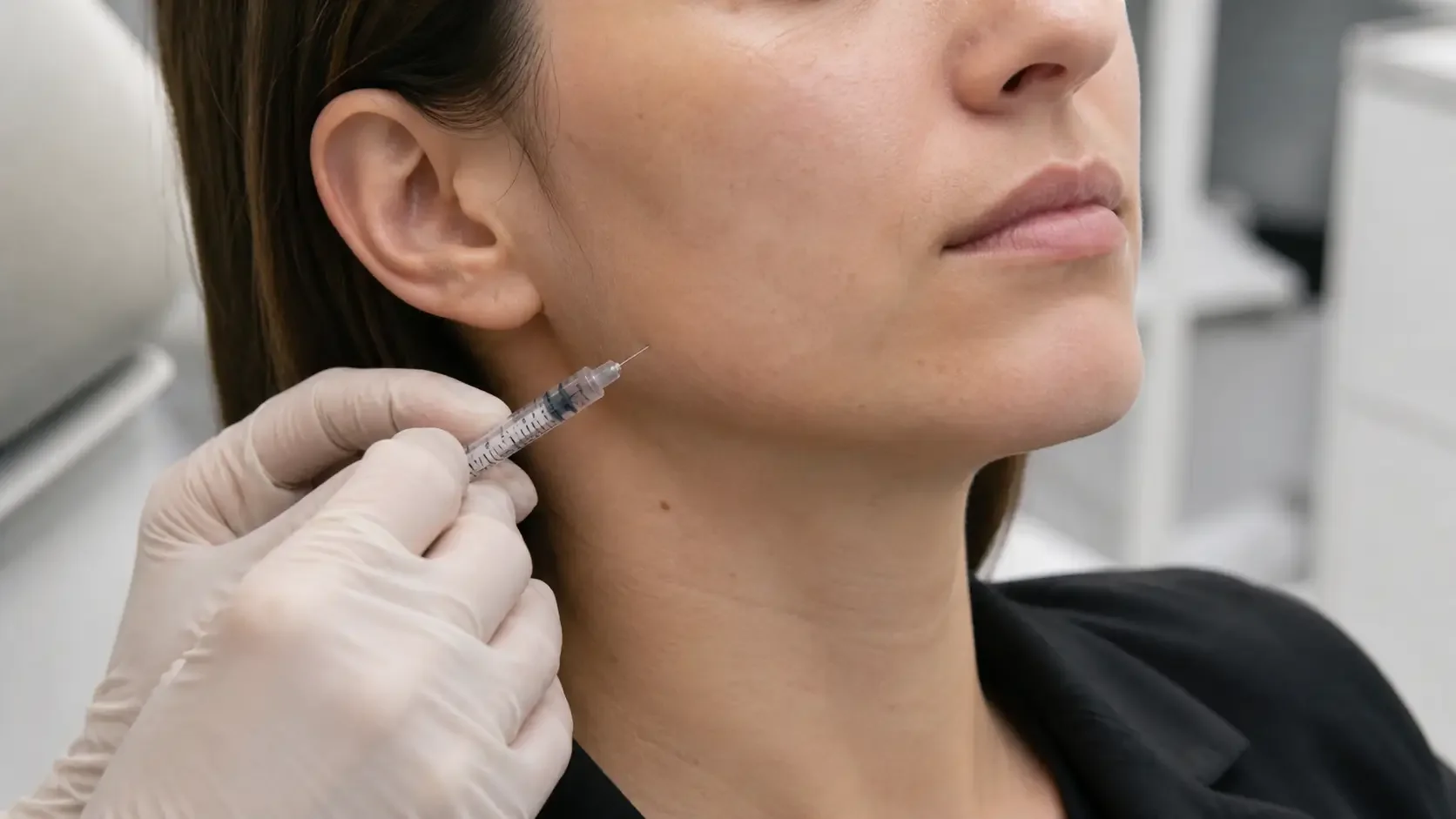
A physician-guided approach to jawline slimming
The masseter muscle plays an important role in chewing and lower-face structure. When this muscle is naturally prominent or enlarged from repeated activity, it can make the lower face appear wider or more square.
Masseter slimming Botox should be planned carefully because the goal is not to weaken the face or create an artificial “V-line” look. The goal is gradual, subtle refinement while preserving normal facial balance and function.
Dr. Sodeifi evaluates masseter size, muscle strength, facial proportions, jawline shape, and asymmetry before recommending treatment. This anatomy-guided approach helps determine whether Botox is likely to improve the lower-face contour or whether the jawline shape is primarily related to bone structure, facial volume, or other factors.
What masseter slimming Botox may help improve
Masseter slimming Botox may help selected cosmetic patients with:
A square or heavy lower-face appearance related to enlarged masseter muscles
Prominent jaw muscles along the lower face
Lower-face width caused partly by muscle bulk
Jawline imbalance related to asymmetric masseter size
Gradual softening of the lower-face contour
A more refined but still natural jawline appearance
The goal is not to dramatically change your face. The goal is to soften excess muscle bulk when the masseter is contributing to lower-face heaviness.
Why the masseter muscle becomes prominent
The masseter muscle can become prominent because of genetics, natural jaw strength, chewing habits, clenching patterns, or repeated muscle use. When the masseter is larger, the lower face may appear broader, stronger, or more squared.
However, not every square jawline is caused by the masseter muscle. Bone structure, chin shape, facial fat, skin laxity, and overall facial proportions also influence jawline appearance. This is why consultation and direct muscle assessment are important before treatment.
How Botox works for cosmetic masseter slimming
Botox temporarily reduces targeted activity in the masseter muscle. With reduced muscle activity over time, the masseter may gradually decrease in bulk, creating a softer lower-face contour in appropriately selected patients.
Treatment planning depends on:
Masseter muscle size
Masseter strength
Lower-face width
Jawline shape
Facial proportions
Baseline asymmetry
Desired degree of slimming
Need to preserve natural chewing function
Masseter slimming develops gradually. Unlike some upper-face Botox treatments, the contour change is not immediate because muscle size changes over time.
Pricing
Masseter slimming Botox pricing depends on anatomy, muscle size, strength, dosing, and whether treatment is performed alone or combined with other cosmetic areas.
For the most current pricing, please see the Botox pricing page or contact the office a (925) 726-3876.
Who may be a good candidate
Masseter slimming Botox may be appropriate for patients whose lower-face width is partly caused by enlarged masseter muscles.
It may be a good fit for patients who:
Notice a square or bulky jawline caused by muscle fullness
Want gradual lower-face refinement without surgery
Prefer a subtle, natural-looking result
Want physician-performed Botox rather than a medspa-style approach
Understand that the result depends on anatomy and muscle size
Candidacy is determined during consultation based on facial anatomy, masseter strength, lower-face proportions, medical history, and cosmetic goals.
Who may not be a good candidate
Masseter slimming Botox may not be the best choice if lower-face width is mainly caused by jawbone structure, facial fat, skin laxity, or chin/jaw proportions rather than muscle bulk.
Patients who already have a narrow lower face, significant lower-face laxity, weak chewing muscles, marked facial asymmetry, or unrealistic expectations for dramatic reshaping may not be ideal candidates. Dr. Sodeifi will recommend treatment only if it is likely to create a balanced, natural-looking cosmetic improvement.
What masseter slimming Botox cannot do
Masseter Botox cannot change the jawbone, remove facial fat, tighten loose skin, or create a dramatic surgical transformation. It also cannot guarantee a sharply tapered or “V-line” face.
For cosmetic use, the most realistic goal is gradual softening of masseter bulk and improved lower-face balance in patients whose jawline width is muscle-driven.
What to expect
Treatment is performed in-office after Dr. Sodeifi evaluates your masseter muscles, jawline, and lower-face proportions. Injections are placed into the masseter muscle in a customized pattern based on your anatomy and cosmetic goals.
Most Botox begins to relax targeted muscle activity within several days, but visible masseter slimming usually develops more gradually over several weeks as the muscle decreases in bulk. Results vary based on dose, muscle size, metabolism, and treatment pattern.
Common side effects may include temporary soreness, bruising, swelling, tenderness, or asymmetry. With masseter Botox specifically, possible unwanted effects can include chewing fatigue, smile changes, or excessive slimming if dosing is not appropriate. This is why conservative, anatomy-guided treatment is important.
Related treatments
Patients considering cosmetic masseter slimming Botox may also be interested in:
SkinPen Microneedling for lower-face skin texture
PRP Microneedling for regenerative skin-quality support
The best plan depends on whether the concern is muscle bulk, facial proportions, jawline structure, skin quality, or a combination.
Frequently Asked Questions (FAQ) About Masseter Slimming Botox
-
Masseter slimming Botox is a cosmetic treatment that relaxes enlarged masseter muscles. In selected patients, reducing masseter activity can gradually soften a square or bulky lower-face appearance.
-
Yes. This page focuses on cosmetic masseter slimming for lower-face contour in selected candidates. If your main concern is jaw clenching, bruxism, tooth grinding, or TMJ-related muscle discomfort, start with the separate TMJ Botox for jaw clenching and bruxism page instead. The muscle area may overlap, but the treatment goal and decision-making are different.
-
It may soften lower-face width in patients whose jawline fullness is caused by enlarged masseter muscles, but it cannot change bone structure or guarantee a dramatic V-line result.
-
Temporary chewing fatigue can occur, especially with stronger dosing or very active chewing muscles. Conservative dosing and precise placement help reduce this risk.
-
It can if Botox spreads or is placed too high or too far forward. Dr. Sodeifi evaluates the masseter muscle carefully and uses anatomy-guided placement to reduce this risk.
-
Muscle relaxation begins earlier, but visible slimming usually takes several weeks because the masseter muscle decreases gradually with reduced activity. Results vary depending on muscle size, dose, and anatomy.
-
Results vary, but many patients notice Botox effects for several months. The visible contour change may last longer or shorter depending on muscle strength, dose, treatment pattern, and repeat treatments.
Schedule a consultation
NeuroBeauty is located in Walnut Creek, California, and serves patients from Lafayette, Danville, Alamo, San Ramon, Pleasant Hill, Concord, and the greater East Bay. If you are considering cosmetic masseter slimming Botox in Walnut Creek, NeuroBeauty Clinic offers a physician-performed, anatomy-guided approach focused on natural-looking lower-face balance and conservative treatment planning.
Call (925) 726-3876or request a consultation online, and our office will contact you directly to discuss availability and next steps.
Page details
Masseter Slimming Botox in Walnut Creek
Physician-performed masseter slimming Botox in Walnut Creek. Anatomy-guided treatment to soften bulky jaw muscles and refine lower-face balance naturally.
Masseter Slimming Botox in Walnut Creek
Physician-performed masseter slimming Botox in Walnut Creek. Anatomy-guided treatment to soften bulky jaw muscles and refine lower-face balance naturally.