

Botox for Upper Extremity Spasticity in Walnut Creek
Upper extremity spasticity is a neurologic condition that causes increased muscle tone, stiffness, tightness, or involuntary contraction in the arm, wrist, hand, or fingers. It may affect comfort, hygiene, positioning, stretching, dressing, caregiving, and daily function.
At NeuroBeauty Clinic in Walnut Creek, Botox for upper extremity spasticity is performed exclusively by Dr. Negar Sodeifi, MD, a neurologist. Treatment is guided by neurologic history, muscle tone pattern, range of motion, functional goals, safety considerations, and whether Botox is appropriate for the specific muscles involved.
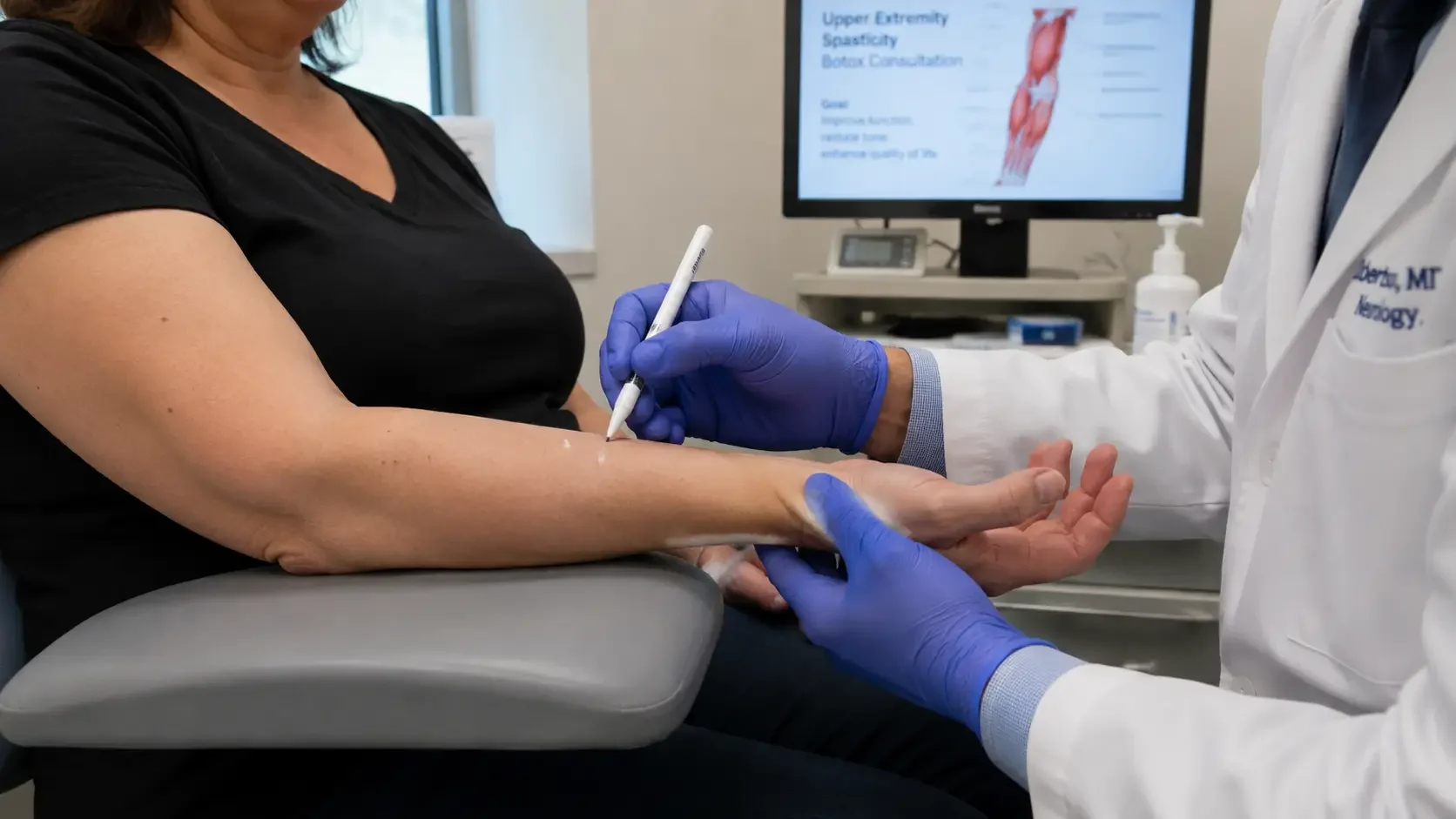
Neurologist-guided approach to spasticity
Upper extremity spasticity is not the same as ordinary muscle tightness. It usually reflects abnormal nerve signaling after an injury or condition affecting the brain, spinal cord, or motor pathways.
Because spasticity patterns vary, treatment should not follow a generic injection template. Some patients have elbow flexion. Others have wrist flexion, clenched fingers, thumb-in-palm posture, forearm pronation, shoulder involvement, or several patterns together.
Dr. Sodeifievaluates the muscle pattern before recommending treatment. The goal is to reduce excessive tone in selected muscles while preserving as much useful movement and strength as possible.
What upper extremity spasticity may cause
Symptoms can vary depending on the condition, severity, and muscles involved. Patients may notice:
Arm stiffness or tightness
Elbow flexion or difficulty straightening the arm
Wrist flexion or abnormal wrist posture
Finger curling or clenched fist posture
Thumb-in-palm posture
Forearm turning inward or pronation
Shoulder tightness or abnormal positioning
Pain or discomfort from muscle overactivity
Difficulty with hygiene or skin care
Difficulty dressing or positioning the arm
Reduced range of motion
Caregiver difficulty with stretching or hand care
The main question is which muscles are overactive and which treatment goals are realistic.
How Botox works for upper extremity spasticity
Therapeutic Botox temporarily reduces excessive muscle contraction by blocking nerve signaling at targeted muscles. In upper extremity spasticity, carefully selected injections may reduce tone in specific muscles of the arm, wrist, hand, or fingers.
The goal is not to weaken the whole arm. The goal is targeted reduction of overactivity in selected muscles that are contributing to stiffness, posture, pain, hygiene difficulty, or functional limitations.
Depending on the pattern, treatment may involve muscles related to:
Elbow flexion
Wrist flexion
Finger flexion
Thumb-in-palm positioning
Forearm pronation
Shoulder positioning
The exact plan depends on the diagnosis, exam findings, muscle pattern, and goals.
Common conditions associated with spasticity
Upper extremity spasticity can occur after several neurologic conditions, including:
Stroke
Traumatic brain injury
Spinal cord injury
Multiple sclerosis
Cerebral palsy
Other neurologic injuries or disorders affecting motor pathways
Spasticity can be mild or severe. Some patients primarily need help with comfort and positioning. Others may have goals related to hygiene, dressing, stretching, therapy participation, or function.
Why diagnosis and goals matter
Spasticity treatment should begin with a clear goal. Therapeutic Botox may be used differently depending on whether the goal is:
reducing pain
improving hand hygiene
reducing clenched fist posture
improving brace tolerance
improving passive range of motion
reducing caregiver burden
improving positioning
supporting physical or occupational therapy goals
helping selected functional movements when appropriate
Not every patient will have the same treatment goal. For some patients, reducing tone too much could worsen useful function. That is why muscle selection and dosing should be individualized.
Botox vs. physical or occupational therapy
Therapeutic Botox does not replace physical therapy, occupational therapy, stretching, splinting, bracing, or neurologic rehabilitation when those are appropriate.
In many patients, Botox is best considered as part of a broader spasticity-management plan. Reducing excessive tone in targeted muscles may make stretching, splinting, hygiene, positioning, or therapy easier, depending on the patient’s pattern and goals.
Dr. Sodeifi can help determine whether Botox is likely to support your broader treatment plan.
Who may be a good candidate
Botox may be appropriate for selected patients with focal upper extremity spasticity involving specific muscles of the arm, wrist, hand, or fingers.
It may be a good fit for patients who:
Have arm, wrist, hand, or finger spasticity
Have focal muscle overactivity that can be targeted
Have stiffness that interferes with comfort, hygiene, positioning, or care
Have spasticity after stroke, brain injury, spinal cord injury, multiple sclerosis, cerebral palsy, or another neurologic condition
Have realistic treatment goals
Understand that treatment is individualized and results vary
Candidacy is determined during consultation based on diagnosis, exam findings, tone pattern, range of motion, goals, medical history, and safety considerations.
Who may not be a good candidate
Therapeutic Botox may not be appropriate for every patient with arm or hand stiffness. It may not be the right treatment when symptoms are primarily due to fixed contracture, joint deformity, arthritis, tendon shortening, severe weakness without meaningful spastic overactivity, infection at the treatment site, or another condition that would not be expected to respond to muscle relaxation.
It may also not be appropriate for patients with certain neuromuscular disorders, allergy to botulinum toxin ingredients, active infection, significant swallowing or breathing concerns, pregnancy or breastfeeding depending on clinical judgment, or unrealistic expectations.
If the problem is a fixed contracture rather than dynamic muscle overactivity, Botox may have limited benefit.
What upper extremity spasticity Botox cannot do
Therapeutic Botox cannot cure the underlying neurologic condition, reverse a stroke or spinal cord injury, restore normal strength, permanently correct contractures, replace rehabilitation, or guarantee improved function.
It may reduce focal muscle overactivity in selected patients. The best outcomes usually come from clear goals, careful muscle selection, and coordination with stretching, bracing, therapy, or home care when appropriate.
What to expect
Your visit begins with a focused review of your neurologic history, spasticity pattern, functional concerns, prior treatments, therapy history, and goals.
Dr. Sodeifievaluates tone, posture, range of motion, muscle involvement, and whether Botox is likely to help. If treatment is appropriate, the injection pattern is customized based on the muscles involved.
Some patients begin noticing improvement within several days, with fuller benefit often developing over 1–2 weeks. Duration varies, but therapeutic Botox effects commonly last around 3 months.
Safety considerations
Botox for upper extremity spasticity requires careful dosing because the goal is to reduce unwanted tone without creating excessive weakness.
Possible side effects may include:
Injection-site discomfort
Bruising or tenderness
Temporary weakness in treated muscles
Reduced grip or hand strength
Arm heaviness
Fatigue
Pain or soreness
Incomplete response
Unwanted change in function
Rare systemic botulinum toxin effects can occur, including generalized weakness, swallowing difficulty, breathing difficulty, or other distant spread symptoms. Patients with neuromuscular disorders, respiratory concerns, or swallowing problems may require extra caution.
Pricing
Pricing for upper extremity spasticity Botox depends on diagnosis, treatment pattern, dose, number of muscles treated, and treatment complexity.
Therapeutic Botox at NeuroBeauty Clinic is self-pay. Consultation or referral may be required to determine candidacy and expected benefit.
Please contact the office at (925) 726-3876 for current therapeutic Botox pricing.
Related treatments
Patients considering upper extremity spasticity Botox may also be interested in:
Trigeminal Neuralgia / Facial Pain Evaluation
The best plan depends on diagnosis, muscle pattern, neurologic history, functional goals, and treatment priorities.
Schedule a consultation
If you are looking for Botox treatment for upper extremity spasticity in Walnut Creek, NeuroBeauty Clinic offers neurologist-performed evaluation and treatment planning focused on anatomy, diagnosis, safety, and individualized care.
Call (925) 726-3876 or request a consultation online, and the office will contact you directly to discuss availability and next steps.
FAQ
What is upper extremity spasticity?
Upper extremity spasticity is increased muscle tone, stiffness, or involuntary contraction affecting the arm, wrist, hand, or fingers. It can occur after neurologic injury or disease and may interfere with movement, positioning, hygiene, comfort, or care.
What causes upper extremity spasticity?
It can occur after conditions affecting the brain, spinal cord, or motor pathways, including stroke, traumatic brain injury, spinal cord injury, multiple sclerosis, cerebral palsy, and other neurologic disorders.
Can Botox help upper extremity spasticity?
Botox may help selected patients by reducing overactivity in specific muscles.
Is Botox approved for spasticity?
Yes. OnabotulinumtoxinA is used for several medical indications, including spasticity.
Is upper extremity spasticity Botox cosmetic?
No. Botox for upper extremity spasticity is therapeutic. The goal is to reduce abnormal muscle tone, stiffness, or involuntary contraction, not to improve appearance.
What muscles are treated?
The muscles depend on the pattern. Treatment may involve muscles contributing to elbow flexion, wrist flexion, finger curling, thumb-in-palm posture, forearm pronation, or shoulder positioning.
Will Botox improve hand function?
It depends. Some patients may have improved comfort, hygiene, positioning, or ease of care. Functional improvement depends on baseline strength, contracture, neurologic injury, therapy plan, and treatment goals.
Will Botox make my arm weak?
Temporary weakness can occur, especially in treated muscles. The plan is designed to reduce unwanted tone while preserving useful strength and function as much as possible.
How long does it last?
Duration varies, but therapeutic Botox effects commonly last around 3 months. Repeat treatment timing depends on response, dose, safety, and goals.
Does insurance cover upper extremity spasticity Botox?
Some insurance plans cover Botox for certain therapeutic indications, but NeuroBeauty Clinic does not bill insurance for these services. Therapeutic Botox at this location is self-pay.